
Planning to launch a waste-to-oil pyrolysis business? Get a full breakdown of equipment costs, operating expenses, product yields, permit requirements and realistic ROI calculations for tire, plastic and oil sludge pyrolysis plants.

Mr. Xu, CEO&Engineer ·Technical Director·Engineer
We have accumulated 23 years of experience in the pyrolysis industry, spanning from 2003 to the present.
Mechanical & Oil Engineer PyrolysisUnit Chef Engineer Technical Advisor, China Recycling Association
Pyrolysis can convert waste materials and biomass into useful products such as oil, combustible gas, and carbon-rich solids. Yet, despite its potential, it has not become a universal solution for processing municipal waste, plastics, and other discarded materials.
The reason is not simply that pyrolysis machines are expensive or that the technology does not work. The bigger challenge is making the entire process commercially reliable. A successful plant needs a consistent feedstock supply, suitable pretreatment, stable reactor operation, products that meet buyer specifications, and a realistic market for everything it produces.
It is also important to distinguish between different applications. Biomass carbonization has established industrial uses, while plastic waste pyrolysis for recovering chemical feedstocks is still developing in many markets. Tire pyrolysis and oil sludge treatment have their own engineering and commercial requirements.

So, why is pyrolysis not more widely used? The answer lies in eight connected challenges that affect the economics, environmental performance, and long-term operation of industrial projects.
First, Is Pyrolysis Really an Unproven Technology?
Not entirely. Pyrolysis is an established thermochemical process used in several industries. Biomass carbonization, for example, has been practiced commercially for many years. Industrial systems are also available for processing waste tires, plastics, and other suitable materials.
The situation is different when pyrolysis is used to process heterogeneous municipal plastic waste and produce consistent chemical feedstocks at a competitive cost.
The U.S. Environmental Protection Agency describes several U.S. plastic pyrolysis facilities as operating at pilot and early commercial scale. This shows that industrial development is taking place, but widespread deployment is still limited compared with conventional mechanical recycling.
The distinction matters. The technology can work under suitable conditions, but that does not mean every feedstock, reactor design, and product pathway is ready for large-scale commercial operation.
Pyrolysis should therefore be evaluated by application rather than treated as one technology with a single level of maturity.
Reference: U.S. EPA: Advanced Recycling of Plastics.
Why Industrial Pyrolysis Projects Struggle to Scale Up
A laboratory experiment and a commercial production facility face very different operating conditions. A small test can use carefully prepared material, controlled temperatures, and frequent operator adjustments. An industrial plant needs to maintain performance across thousands of operating hours while handling real-world feedstock variations.
The difference becomes clear when examining the following challenges.
1. Feedstock Quality Is Often Less Consistent Than Expected
Pyrolysis performance depends heavily on the material entering the reactor. In commercial waste streams, feedstock can change from one delivery to another in moisture, particle size, polymer composition, contamination, and mineral content.
This is particularly important for plastic waste.
Polyethylene (PE) and polypropylene (PP) are common targets for plastic-to-oil and chemical feedstock recovery. However, mixed waste may also contain PET, PVC, multilayer packaging, paper, metals, food residues, fillers, and other unwanted materials.
| Feedstock | Main Processing Challenge | Potential Consequence |
|---|---|---|
| PE and PP plastics | Variable composition, melting behavior, and additives. | Changes in product distribution and operating conditions. |
| PVC-containing plastics | Chlorine-bearing compounds and acid gas management. | Corrosion, contamination, and additional gas treatment requirements. |
| PET-containing plastics | Oxygen-containing chemical structure and different decomposition behavior. | Different liquid product composition and additional upgrading needs. |
| Waste tires | Steel wire, rubber composition, and sulfur-containing compounds. | Additional material handling and product treatment requirements. |
| Oil sludge | Variable water, sediment, and contaminant levels. | More demanding pretreatment and residue handling. |
| Agricultural biomass | Moisture, particle size, ash, and seasonal availability. | Changes in energy requirements and solid product quality. |
For example, PVC introduces chlorine-related treatment requirements, including the management of hydrogen chloride. It should not be casually mixed into a feedstock stream designed for polyolefin-rich plastic pyrolysis. Likewise, PET cannot be assumed to behave like PE or PP in a conventional plastic-to-oil process.
These problems increase sorting, inspection, and pretreatment requirements. They also make it more difficult to maintain stable product quality.
The practical solution is not to accept every kind of waste. It is to define the feedstock specification, establish suitable rejection limits, and secure enough qualifying material before the plant is built.
2. Reactor Reliability Becomes More Difficult at Industrial Scale
Heating a small quantity of material is relatively straightforward. Maintaining uniform heat transfer, controlled vapor flow, and stable material movement inside a large industrial reactor is much more demanding.
Different feedstocks create different mechanical and thermal problems.
Plastic can soften and melt before completing thermal decomposition. Poorly designed feeding and heating arrangements can create uneven temperature distribution, material accumulation, and blockages.
Oil sludge and some heavy organic residues may form deposits or coke that gradually restrict heat transfer and internal flow. Tire processing creates its own demands involving steel wire handling and solid residue discharge.
Several engineering details therefore become important:
- Heat distribution across the working reactor volume.
- Material residence time and feed rate control.
- Resistance to corrosion, abrasion, and thermal cycling.
- Sealing and controlled handling of process vapors.
- Accessible inspection and maintenance points.
- Consistent feeding and safe product discharge.
A reactor that performs well during a short demonstration may still experience problems during extended operation if these factors are not properly addressed.
This is one reason buyers should request evidence of performance using their actual feedstock rather than relying entirely on a machine’s advertised daily capacity.
3. The Output Is Not Automatically a Finished Commercial Product
One of the biggest gaps between pyrolysis theory and commercial operation is the difference between producing a material and producing something a customer is willing and legally able to buy.
A pyrolysis reactor can produce liquid, gas, and solid products, but their quality depends on feedstock composition, process conditions, and downstream handling.
For example:
Plastic pyrolysis oil: The recovered liquid can contain a wide range of hydrocarbons. Depending on its composition, it may require filtration, distillation, hydrotreatment, or other upgrading before it can be accepted as a chemical feedstock or a specified fuel.
Tire pyrolysis oil: It may contain sulfur-bearing compounds and other components that influence its suitability for particular industrial applications. Its quality must be assessed against the intended buyer’s requirements.
Pyrolysis char: Solid residue from tire or plastic processing is not automatically equivalent to high-quality recovered carbon black. Additional processing, such as milling, separation, or other upgrading, may be required, depending on the target market.
Biomass-derived char: Charcoal and biochar are different commercial products. Their specifications, applications, and quality-control requirements are not interchangeable.
| Pyrolysis Output | What Buyers Usually Need to Verify |
|---|---|
| Pyrolysis oil | Density, viscosity, water, sulfur, flash point, stability, and relevant distillation characteristics. |
| Combustible gas | Composition, heating value, safe handling, and suitability for process heat recovery. |
| Tire-derived char | Fixed carbon, ash, sulfur, particle size, surface characteristics, and potential for further upgrading. |
| Biomass biochar | Organic carbon, ash, moisture, pH, and contaminant levels for the intended application. |
A 2026 review of real mixed and contaminated plastic feedstocks highlights this problem: high liquid yield and heating value do not necessarily mean that the recovered oil passes the required industrial quality tests.
Reference: From Waste Heterogeneity to Circular Resources: A Review of Thermal and Catalytic Pyrolysis.
4. Additional Upgrading Equipment Increases the Total Investment
Some project proposals focus almost entirely on the pyrolysis reactor. However, the complete production system may require significantly more equipment.
Depending on the material and target product, additional systems may include:
- Shredding, screening, and drying equipment.
- Feedstock storage and automatic feeding.
- Vapor condensation and oil collection.
- Process gas recovery and controlled combustion.
- Oil filtration, separation, and downstream distillation.
- Solid residue cooling, screening, and further processing.
- Emission treatment and wastewater management.
These systems are not unnecessary extras. They are part of the industrial process required to convert incoming waste into a product that can be handled, stored, tested, and sold.
For plastic-to-chemical projects, integration with downstream refining or petrochemical facilities can be particularly important. Chemical producers often require consistent feedstock composition, which may be difficult to achieve using untreated pyrolysis oil.
As a result, the investment must be assessed across the complete process chain rather than just the main reactor.
Why Is Pyrolysis Sometimes More Expensive Than Conventional Waste Treatment?
5. The Economics Depend on Both Waste Costs and Product Markets
Buying a pyrolysis machine does not automatically create a profitable recycling business. The commercial result depends on the cost of obtaining waste, the cost of processing it, and the value of the products recovered.
Several factors influence the economics:
- Feedstock cost: Some businesses receive payment for accepting waste, while others must purchase and transport their raw materials.
- Pretreatment: Sorting, drying, shredding, and removing contaminants increase processing costs.
- Energy: The plant needs energy to heat the feedstock and maintain operating conditions.
- Maintenance: Reactor components, seals, pumps, condensers, and material handling equipment require inspection and replacement.
- Product upgrading: Additional processing may be required before oil or char can meet buyer specifications.
- Logistics: Both incoming waste and outgoing products have transportation costs.
The value of recovered products also changes with market conditions. When virgin petroleum-derived feedstocks are inexpensive, some recycled intermediates become harder to sell competitively.
However, this does not mean that pyrolysis is always uneconomical. Local waste disposal costs, tipping fees, feedstock contracts, industrial fuel demand, and recycled-content requirements can make a particular project more attractive.
6. Chemical Recycling Has Not Yet Reached Broad Cost Competitiveness
Plastic pyrolysis needs to compete not only with landfill disposal but also with mechanical recycling and established petrochemical supply chains.
Mechanical recycling is generally a more direct option when plastic waste is sufficiently clean, sortable, and suitable for remelting. Pyrolysis is more relevant for selected streams that are difficult to recycle mechanically or that can be converted into useful chemical intermediates.
Even then, the cost of producing and upgrading pyrolysis oil can be higher than the cost of obtaining conventional fossil feedstocks.
The European Commission’s Joint Research Centre examined this issue in its July 2026 report, Economic Viability of Chemical Recycling: Current and Future Perspectives.
The report concludes that chemical recycling in the EU does not yet achieve cost parity with virgin plastics, although demand for recycled feedstocks under packaging and recycled-content requirements may create commercial opportunities.
This is an important distinction: a process can have a useful environmental or resource-recovery role without being the cheapest source of raw material in every market.
Read the official report: JRC: Economic Viability of Chemical Recycling.
Environmental Performance and Regulation Also Affect Adoption
7. Pyrolysis Is Not Automatically an Environmentally Better Alternative
Pyrolysis operates differently from direct combustion because the feedstock is thermally decomposed under oxygen-limited or oxygen-free conditions. However, this does not mean the process has no emissions or that every resulting product is environmentally beneficial.
Non-condensable gases may be recovered and used as process fuel, but their combustion creates exhaust gases that need to be managed. Other important environmental considerations include:
- Emissions from startup fuel and process heating.
- Leaks or incomplete capture of process vapors.
- Wastewater and contaminated cooling streams.
- Handling of solid residues and separated contaminants.
- Emissions associated with drying, pretreatment, and transportation.
- Greenhouse gas emissions from the final use of fuel products.
The environmental result depends on the entire system, not just the reactor itself.
For example, plastic pyrolysis that produces fuel and then burns that fuel is different from a pathway that recovers chemical feedstocks for manufacturing new materials. Their lifecycle impacts and resource-recovery benefits should not be treated as equivalent.
A 2025 life cycle assessment study published in Environmental Science: Advances found that the environmental impacts of plastic pyrolysis vary significantly depending on the technology setup and process configuration. The energy source and the treatment of process gas can change the overall result.
Reference: The Effects of the Technological Setup of Plastic Waste Pyrolysis on Its Environmental Performance.
8. Permits, Product Classification, and Public Acceptance Can Delay Projects
Industrial pyrolysis facilities handle waste materials, high temperatures, flammable gases, process oils, and solid residues. Their operation may therefore involve several regulatory areas.
Depending on the country, feedstock, and facility design, project developers may need to address:
- Waste handling and processing authorization.
- Air emissions and exhaust treatment requirements.
- Fire prevention and process safety.
- Storage and transportation of waste and recovered products.
- Wastewater and residue management.
- Product specifications and end-use restrictions.
Another issue is how the recovered product is classified. A liquid produced by pyrolysis is not automatically considered a finished fuel or a recycled chemical feedstock. Its composition and intended use can determine which additional quality and regulatory requirements apply.
Public acceptance also matters. Communities may be concerned about odor, air quality, truck movements, fire hazards, and the management of contaminated residues.
These concerns are easier to address when a project can provide transparent emissions data, a clear waste handling plan, and credible information about its actual products and operating conditions.
For a more detailed discussion of process safety, see Is Pyrolysis Safe?. For the environmental side, read Does Pyrolysis Produce CO2?.
Not Every Waste Stream Should Be Sent to Pyrolysis
One reason pyrolysis is not installed everywhere is that it is not the best treatment method for every type of waste.
For suitable clean plastic streams, mechanical recycling may preserve more material value with fewer processing steps. For organic waste with high moisture content, biological treatment may be more appropriate. Some waste materials require specialized hazardous waste treatment rather than conventional pyrolysis.
The role of pyrolysis is therefore to complement other waste management technologies, not replace all of them.
| Waste Type | Potentially Suitable Route | Important Consideration |
|---|---|---|
| Clean, sortable PE and PP | Mechanical recycling where product quality permits; selected pyrolysis pathways for suitable remaining streams. | Compare material quality, sorting cost, and the value of the recovered output. |
| Mixed or difficult-to-recycle polyolefin waste | Potential pyrolysis feedstock after appropriate preparation. | Feedstock consistency, contamination, and downstream oil upgrading. |
| End-of-life tires | Mechanical recovery, material recovery, or suitable tire pyrolysis. | Markets for oil, recovered carbon material, and steel wire. |
| Dry woody biomass | Carbonization or biomass pyrolysis. | Feedstock moisture, charcoal quality, and product demand. |
| High-moisture organic waste | Biological treatment or another appropriate thermal treatment. | Drying demand can make conventional pyrolysis less attractive. |
| Hazardous or chemically contaminated waste | Specialized treatment based on waste characterization and regulatory approval. | Contaminant behavior, emissions, residues, and facility authorization. |
The best project begins by identifying which materials are suitable for the selected technology. Choosing pyrolysis simply because it can thermally decompose organic matter is not a sound investment strategy.
What Needs to Change for Pyrolysis to Become More Widely Used?
Wider adoption will depend less on one dramatic breakthrough and more on improving the complete industrial system.
More Reliable Feedstock Supply Chains
Plants need long-term access to suitable raw materials. Better collection systems, sorting, material inspection, and feedstock contracts can reduce uncertainty and help facilities maintain stable operating conditions.
For large projects, the supply of qualifying waste should be verified before the reactor capacity is finalized.
Better Integration of Energy and By-Product Recovery
Non-condensable process gas can sometimes be recovered and reused as heating fuel. Better heat integration, suitable insulation, and efficient material preparation can reduce external energy demand.
However, energy recovery should be demonstrated through actual operating data. It does not mean that every plant can run without external fuel or electricity.
More Consistent Products and Stronger Downstream Markets
Pyrolysis businesses need buyers who accept the recovered products under clearly defined quality specifications.
Investment in upgrading, separation, and quality testing can improve the commercial value of recovered oil and solid products. The best projects also establish product offtake arrangements before commissioning.
Better Environmental Measurement
Future industrial development should rely on measured mass balances, energy consumption, emissions, product quality, and waste residue data.
Life cycle assessment can help identify where the process creates genuine environmental benefits and where additional treatment or energy consumption reduces those benefits.
The U.S. Department of Energy’s Strategy for Plastics Innovation also identifies feedstock heterogeneity, process efficiency, energy requirements, and downstream integration as important areas for continued development.
How Can Businesses Determine Whether a Pyrolysis Project Is Viable?
The most reliable way to evaluate a project is to work backward from the available raw material and the market for its recovered products.
Before purchasing equipment, businesses should answer these questions:
- Is there enough suitable feedstock? Confirm the annual volume, source, composition, moisture, and cost of the waste material.
- Can the material be prepared economically? Assess sorting, shredding, drying, and contamination removal requirements.
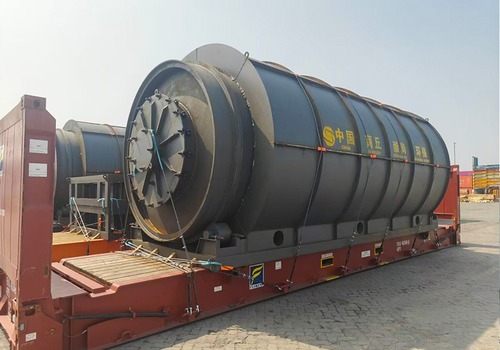
- Does the reactor match the feedstock? Compare batch, semi-continuous, or continuous configurations according to actual processing needs.
- What products will the plant produce? Establish realistic liquid, gas, and solid outputs based on representative feedstock testing.
- Who will buy the recovered products? Confirm product quality requirements, purchase quantities, logistics, and pricing arrangements.
- Can the project meet local environmental requirements? Review permits, emissions controls, fire safety, and residue management before construction.
- Can the plant operate reliably? Evaluate maintenance, energy requirements, spare parts, operator skills, and expected operating hours.
It is useful to conduct feedstock testing and a project feasibility assessment before selecting the final machine configuration. A plant should be designed around verified material and market conditions rather than optimistic production assumptions.
What Types of Industrial Pyrolysis Projects Are More Suitable Today?
Although the industry faces challenges, there are applications where a properly designed pyrolysis system can be commercially useful.
Waste Tire Pyrolysis
End-of-life tires contain rubber, steel wire, and textile materials. Suitable pyrolysis systems can recover liquid oil, solid carbon-rich material, and steel components.
The main commercial challenge is not only producing these materials but also ensuring that the oil and solid products meet the requirements of their intended markets.
For larger projects requiring regular feed and discharge, the continuous tyre pyrolysis plant is one equipment option to evaluate.
Plastic Waste Pyrolysis
Selected polyolefin-rich plastic streams can be converted into hydrocarbon-rich oil and gas. Their suitability depends on the polymer composition, contamination, and downstream product requirements.
For businesses considering a dedicated recycling system, see the plastic pyrolysis plant.
Biomass Pyrolysis
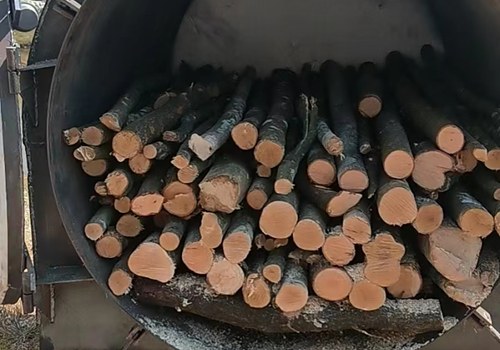
Wood, sawdust, coconut shells, bamboo, and suitable agricultural residues can be processed into charcoal, biochar, and combustible gases.
The economics of these projects often depend on local biomass availability, moisture content, carbon product quality, and the market for the finished material.
Explore the biomass pyrolysis plant for a more detailed look at this application.
For an overview of different industrial waste treatment configurations, visit the waste pyrolysis plant page or browse the PyrolysisUnit equipment catalog.
Frequently Asked Questions About Pyrolysis Adoption
Is Pyrolysis Technology Still Experimental?
Not across all applications. Biomass carbonization is an established industrial process, and pyrolysis equipment is also used in selected tire and waste processing projects. However, some plastic chemical recycling applications remain at pilot or early commercial scale. The maturity of a project depends on the feedstock, process design, product pathway, and operating history.
Why Is Plastic Pyrolysis Not More Common Than Mechanical Recycling?
Mechanical recycling is often simpler and more economical for clean plastics that can be sorted and remelted. Plastic pyrolysis involves thermal conversion, feedstock preparation, process energy, and often downstream oil upgrading. It is more relevant to selected plastic streams that are difficult to manage through mechanical recycling.
Does Pyrolysis Require a Large Amount of Energy?
Pyrolysis requires heat to decompose the feedstock, but the total energy demand varies according to moisture content, material properties, equipment design, insulation, and heat recovery. Some plants reuse combustible process gas, although external energy and electricity are still generally required for startup and plant operation.
Can Pyrolysis Turn All Plastic Waste Into Fuel?
No. Different polymers behave differently during thermal decomposition. PE and PP are common targets for liquid hydrocarbon recovery, while PVC, PET, additives, fillers, and other contaminants can create additional process and product-quality challenges. Feedstock selection and pretreatment are essential.
Is Pyrolysis More Environmentally Friendly Than Incineration?
Not automatically. Pyrolysis and incineration have different processing mechanisms and product outputs. Their environmental performance depends on feedstock, process energy, emissions control, product use, and lifecycle impacts. A project needs a defined comparison basis rather than relying on the technology name alone.
Will Pyrolysis Become More Widely Used in the Future?
It has potential to expand in selected waste treatment and resource recovery markets. Progress will depend on stable feedstock supply, reliable plant operation, competitive processing costs, product quality, downstream demand, and clear environmental requirements. It is more likely to complement established recycling systems than replace every existing waste treatment method.
Conclusion: Pyrolysis Needs a Viable Industrial System, Not Just a Working Reactor
Pyrolysis is not widely adopted in every waste management application because its success depends on more than thermal decomposition. The entire project must work, from feedstock collection and preparation to reactor operation, product upgrading, environmental control, and final sales.
Some applications, such as biomass carbonization, already have established industrial uses. Others, particularly large-scale plastic-to-chemical recycling, still face challenges involving feedstock quality, process reliability, product specifications, and economic competitiveness.
For businesses considering an industrial pyrolysis project, the most important step is to start with the actual waste material and its potential buyers. Once those two sides are clearly established, the appropriate equipment and processing configuration can be selected much more effectively.
Pyrolysis is not a universal replacement for conventional recycling or waste treatment. Its strongest opportunities are in applications where suitable waste streams, reliable technology, and a genuine market for recovered products come together.
That is what turns a promising thermal process into a sustainable industrial operation.

Planning to launch a waste-to-oil pyrolysis business? Get a full
Refractory cement cast, ceramic fiber module, or blanket flat-lay —
If you’re looking at pyrolysis machines for the first time,