
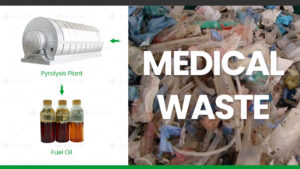
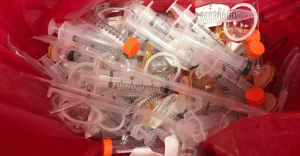
Medical wastes have been found to be among the most complicated wastes to deal with. This waste is heavily regulated, infectious, and costly to transport and treat. Common methods of treatment, like incineration, autoclaving, and landfilling or transporting to central treatment facilities, come with high operational costs and logistic challenges. For hospitals, clinics, nursing homes, and medical waste treatment facilities, pyrolysis has proven to be a viable option where medical wastes such as contaminated plastics, personal protective equipment (PPE), and other packaging materials are subjected to heat treatment to generate useful fuel oil and solid residues.
In your opinion, it is clear that pyrolysis has its advantages. In pyrolysis, you can:
Reduce the cost of transportation and disposal by handling waste near its origin.
Generate energy from plastic and polymer-containing medical waste instead of paying to dispose of the same.
Reduce the quantity and weight of waste needing disposal.
In this article, you will get detailed information on the mechanism of medical waste conversion to fuel oil using pyrolysis. It highlights the quality of the produced fuel oil, the necessary environmental and safety measures to be considered, the feasibility of the technology, and why Pyrolysis Unit should be your partner of choice.
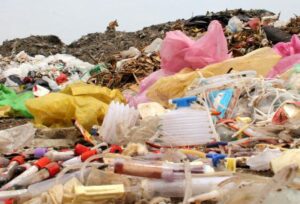
Solution evaluation requires a clear and high-level understanding of the overall process and the steps at which safety and regulatory compliance are ensured. Pyrolysis Unit designs industrial systems for use with medical-waste feedstocks; see below for an overview of the typical configuration and control scheme for a system using medical-waste feedstocks.
Feedstock handling & pre-processing
Source segregation: Both infectious and sharps require adherence to clinical standards. Plastics that can undergo pyrolysis (polyethylene, polypropylene, polystyrene, and many medical plastics) should be segregated from metals, glass, heavy contamination, and infectious materials.
Pre-processing: Some operations include shredding and drying to lower material size and moisture content. Sharp materials and heavily contaminated materials are separated and processed according to regulation. Our units are designed to accept specific feed streams — see our feedstock guidelines to learn about acceptable feed types.
Thermal processing (pyrolysis)
Oxygen-limited reactor: The medical-waste feed is processed in an enclosed reactor that is kept at an oxygen-reduced level within the temperature range necessary for the polymer mix.
Residence time & heating profile: Designed to produce cracking of longer chain molecules into mid-sized hydrocarbons as fuel oil. Monitoring of temperature, pressure, and gas content during the reaction is common practice.
Condensation and fuel oil collection
Multiple stages of condensation: The gases produced in the process pass through condensers and fractionation steps to separate the heavy, medium, and light oils.
Storage and oil polishing: The separated fuel oil is stored in sealed tanks. Distillation or fractional distillation facilities may be used for further upgrading the fuel oil according to its specific use (industrial burner fuel oil, etc.).
Residues and ash handling
Solid residues (char, ash, inorganic impurities) are collected and analyzed. Depending on their composition, solid residues could either be disposed of as non-hazardous inert materials, utilized in industrial processes, or processed in another way, but always in line with the local regulations.
Pollution control and monitoring
Catalytic after-treatment, scrubbing, filtration of emissions: For controlling the stack emissions of particulates, acid gases, and VOCs within the prescribed limit.
Continuous monitoring (CEMS): As required by regulators.
Negative pressure enclosure and odor management systems are used in feedstock processing facilities to minimize environmental impact.
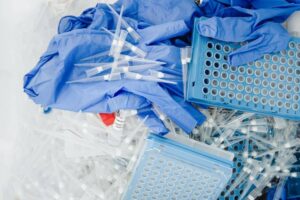
If you are considering pyrolysis for medical waste, regulatory acceptance and environmental performance are top concerns. Pyrolysis Unit designs systems with these priorities in mind.
Regulatory integration
Permitting: Pyrolysis systems treating medical waste will typically require environmental and health permits. Pyrolysis Unit supports clients through permit preparation by supplying emissions modeling data, process descriptions, and CEMS specifications.
Medical waste law: Treatment must align with public health regulations regarding infectious waste. Pyrolysis should be implemented only for non-sharps, appropriately segregated and pre-treated streams per local healthcare waste regulations.
Air emissions and controls
Robust emission control trains (particulate filters, scrubbers, thermal oxidizers, activated carbon) are standard. Systems include continuous monitoring of key pollutants and automated reporting features to meet regulator expectations.
Odor and fugitive emissions: Plant layout and negative-pressure enclosures, coupled with vapor capture, minimize community impacts.
Worker and site safety
Containment and hygiene: Feedstock handling areas should be designed to minimize cross-contamination; personal protective equipment and sharps protocols must remain in force.
Process safety management: Interlocks, pressure relief, flame arrestors, and automatic shutdown sequences protect staff and assets. Pyrolysis Unit provides comprehensive training and documented maintenance checklists.
Life-cycle perspective
Pyrolysis turns plastic waste into energy — a better outcome than landfill for plastics that cannot be recycled. But it’s not a universal replacement for reduction and recycling strategies. We recommend pyrolysis as part of an integrated waste hierarchy: reduce > reuse > recycle > recover (pyrolysis) > dispose.
Transparency and reporting
For healthcare clients, being able to demonstrate proper handling, emissions performance, and beneficial reuse is important for accreditation and community relations. Pyrolysis Unit’s control systems produce audit-ready logs and emissions records to support sustainability reporting and regulatory inspections.
You need a supplier who understands medical waste, regulatory complexity, and the operational realities of healthcare environments. Pyrolysis Unit brings engineered systems, documentation, and service designed for healthcare partners.
What distinguishes Pyrolysis Unit
Proven engineering: Our systems combine robust reactor design, multi-stage condensation, and emissions control modules sized for medical-waste applications.
Compliance-first approach: We prioritize emission controls, continuous monitoring, and documentation to support permitting and audits.
Feedstock expertise: We provide clear feedstock acceptance guidelines and on-site training for segregation and pre-treatment so you achieve predictable yields and maintain regulatory compliance.
Service and training: Commissioning, operator training, preventative maintenance programs, and spare parts support minimize downtime and protect your investment.
Customizable solutions: Whether you need a compact on-site unit for a hospital campus or a regional processing facility serving multiple clinics, we tailor capacity, automation, and control systems to your needs.
How to evaluate proposals
When you solicit proposals, evaluate suppliers on:
Detailed feedstock acceptance and pre-treatment requirements.
Emission control technology and monitoring capabilities.
Guarantees or test data for oil yield and quality on representative medical waste.
Guarantees for uptime, service response time, and spare parts availability.
Financial modeling assistance and references from other healthcare or regulated customers.
Next steps we recommend
Pre-feasibility assessment: Provide Pyrolysis Unit with a summary of your waste streams (types, volumes, contamination levels). We will produce a high-level yield and economic estimate.
Pilot or trial run: For most healthcare clients, a controlled trial using representative feedstock validates yields, oil quality, and emissions before full deployment.
Permitting & engagement: Engage early with local environmental and health authorities. Pyrolysis Unit will support permit documentation and modeling.
Implementation & training: After installation, we provide accredited operator training, SOPs, and an initial maintenance schedule.
 © Copyright2025- 2026 PyrolysisUnit CO., LTD. |