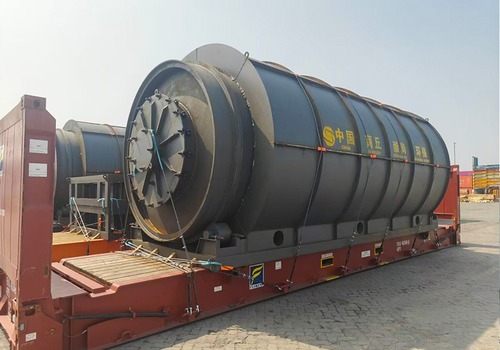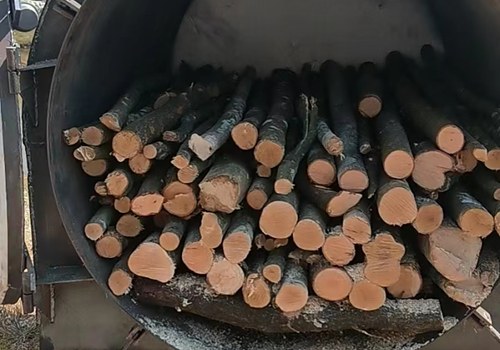


Wood pyrolysis oil is a liquid recovered by condensing vapors produced when wood is heated under oxygen-limited conditions. It is commonly called wood-derived bio-oil when it comes from fast pyrolysis. Its composition depends on the wood feedstock, reaction conditions, and vapor-condensation system.
For dedicated wood feedstock equipment, see the wood pyrolysis machine designed for biochar and bio-oil co-production.
Unlike conventional petroleum fuels, raw wood bio-oil can contain substantial water and oxygenated organic compounds. It may also be acidic and chemically unstable during storage. These properties affect its handling, compatibility with equipment, and potential end uses.

Biomass and bio-oil. Courtesy of Pacific Northwest National Laboratory (PNNL).
Image source and attribution.
Wood Pyrolysis Oil vs. Wood Tar
The terms wood pyrolysis oil, bio-oil, and wood tar are not always used consistently by equipment suppliers. However, they should not automatically be treated as the same product.
Wood-derived bio-oil commonly refers to the complex liquid recovered during biomass fast pyrolysis. It contains a mixture of water and oxygenated organic compounds, with properties influenced by the feedstock and condensation conditions.
Wood tar often refers to a heavier condensable liquid associated with wood carbonization or other thermal processes. Its composition and properties can differ from fast-pyrolysis bio-oil.
Before purchasing equipment or selling the recovered liquid, ask the supplier to define the product, explain how it is collected, and provide representative test results. A product name alone does not establish its composition or suitability for a particular application.
What Determines Wood Pyrolysis Oil Quality?
Several factors determine the composition and consistency of the recovered liquid:
- Wood species and feedstock condition: Different wood types, bark content, moisture, and mineral matter can affect the resulting liquid.
- Feed preparation: Consistent particle size and appropriate moisture control help stabilize heat transfer and process operation.
- Reaction conditions: Heating rate, temperature, and vapor residence time influence the compounds formed during pyrolysis.
- Vapor condensation: Condenser design and cooling conditions affect the recovery and composition of condensable material.
- Storage time: Chemical changes can increase viscosity or lead to phase separation, depending on the oil and storage conditions.
Because these factors vary between installations, general yield percentages should not replace testing of the actual feedstock and product.
How to Test Wood Pyrolysis Oil
Product testing should be selected according to the intended use. For an initial technical assessment, useful measurements may include:
- Water content: Helps evaluate handling, energy content, and suitability for further processing.
- Viscosity and density: Inform pumping, transfer, storage, and equipment compatibility.
- Acidity: Helps assess corrosion risk and material compatibility.
- Heating value: Supports evaluation of potential energy applications.
- Solids and ash: Help identify contamination that may cause deposits or interfere with downstream equipment.
- Storage stability: Shows whether viscosity, phase composition, or other properties change during the intended storage period.
Additional chemical analysis may be necessary when the oil is intended for chemical recovery or upgrading. Use an agreed testing method and representative samples rather than relying on visual appearance alone.
What Is Wood Pyrolysis Oil Used For?
The intended application depends on the oil’s composition and the requirements of the receiving process.
Industrial heat: Some wood-derived bio-oils may be used in compatible industrial combustion systems. Burner design, fuel handling, emissions controls, and the oil’s water and solids content must be evaluated before use.
Fuel upgrading: Bio-oil may be processed through suitable physical or catalytic upgrading routes. Raw wood bio-oil should not automatically be considered a direct substitute for diesel or other finished petroleum fuels.
Chemical recovery: Certain bio-oils contain compounds that may be recovered as chemical intermediates. Whether this is practical depends on composition, separation requirements, product purity, and access to a suitable buyer.
For a wider comparison of end markets across different feedstocks, see our guide to pyrolysis oil uses. For the broader properties of biomass-derived liquids, read biomass pyrolysis oil.
Storage and Handling Considerations
Do not assume that all wood pyrolysis oils can be stored under the same temperature or mixing conditions. Storage requirements should be based on the tested oil, its stability, the tank and pipe materials, and the intended storage period.
Use compatible closed storage equipment, appropriate spill containment, and handling procedures based on the product’s safety data. Monitor changes in viscosity, visible separation, and sediment when these characteristics matter to downstream use. Any heating, agitation, or additive use should be validated for the specific oil rather than applied as a universal rule.
Choosing Equipment for Wood Pyrolysis
The correct equipment depends on whether the objective is to recover a liquid bio-oil, produce wood tar and charcoal, or prioritize a different combination of products. These objectives can require different operating conditions and condensation arrangements.
Review the wood pyrolysis machine specifications, and clarify the expected liquid product and its collection method before making a purchase. For broader equipment options, browse the PyrolysisUnit equipment catalog.
If further processing is required, our pyrolysis oil distillation process guide explains the related upgrading topic.
Frequently Asked Questions
Is wood pyrolysis oil the same as diesel?
No. Raw wood-derived bio-oil has a different composition and can contain substantial water and oxygenated compounds. Its suitability for a specific fuel application depends on testing, required upgrading, and the receiving system.
Can wood pyrolysis oil be stored for a long time?
Storage life depends on the oil composition and conditions. Some bio-oils change during storage, including increases in viscosity or phase separation. Evaluate stability using representative samples and the intended storage conditions.
Is wood tar the same as wood bio-oil?
Not necessarily. The terms can describe liquids from different thermal processes. Confirm the process, composition, and quality specification before comparing products from different suppliers.
Discuss Your Wood Pyrolysis Requirements
Before selecting equipment, define the wood feedstock, target processing capacity, required liquid product, and available product testing. These details help establish whether the proposed system is designed to recover the type of liquid your project needs.