

Choosing a pyrolysis plant manufacturer in Europe starts with identifying the waste stream and the type of process required. A company specializing in end-of-life tire recycling may not provide the same solution as a manufacturer of biomass carbonization equipment or a technology provider converting mixed plastic waste into chemical feedstock.
Europe-based pyrolysis companies also differ in their business models. Some design and manufacture equipment, some develop proprietary thermal-conversion technology, and others deliver integrated plants that combine processing equipment with energy recovery or downstream product handling.
This guide compares five European manufacturers and technology providers by their publicly described specialisms: Pyrum Innovations, Plastic Energy, ETIA Group, PYREG, and Carbo-FORCE. The profiles are intended to help buyers identify relevant candidates, understand their technology focus, and decide which technical information to request before starting a project.
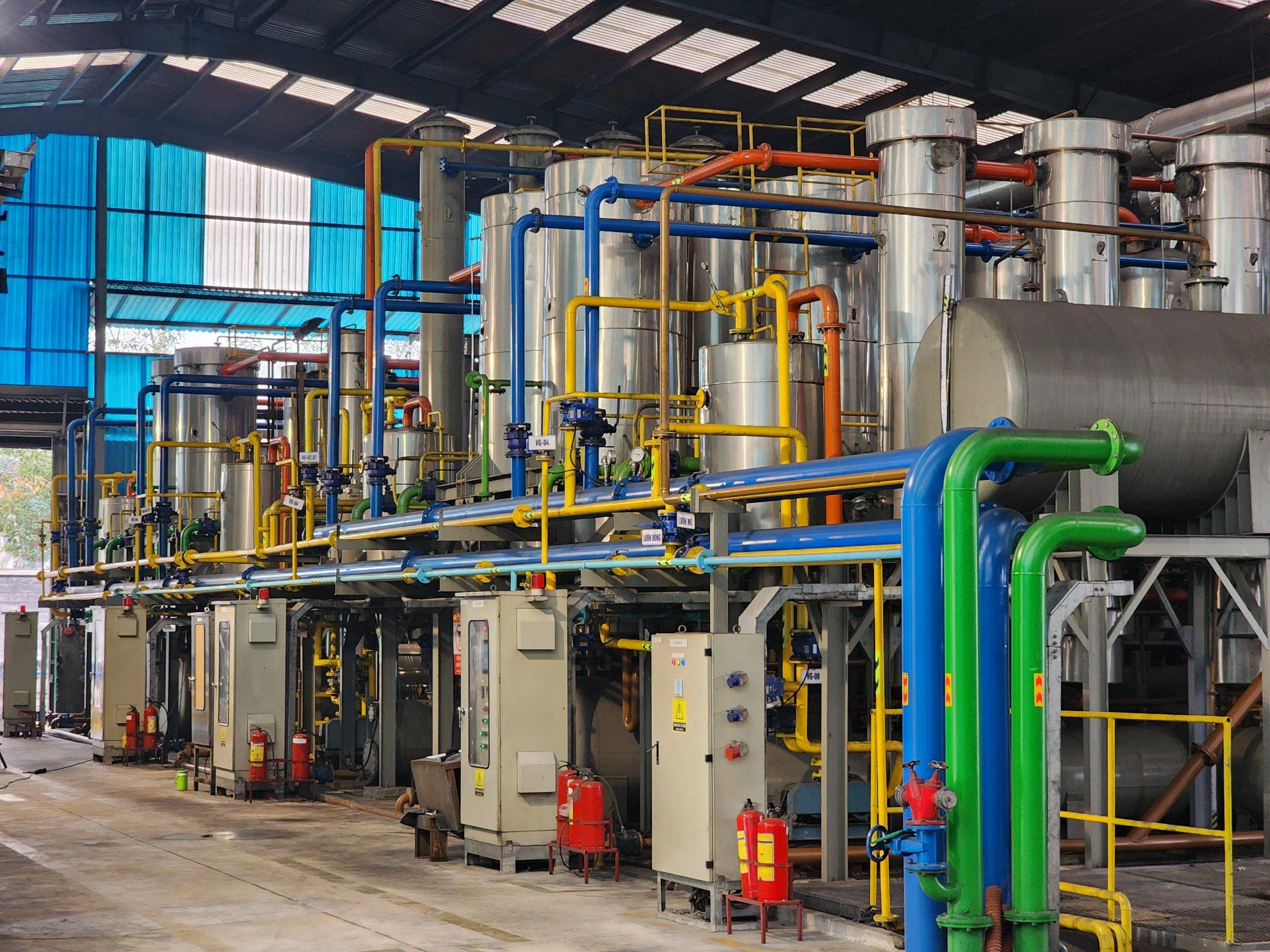
How to read this list: The companies are not ranked from first to fifth. Their technologies address different feedstocks and project objectives, so the most relevant supplier depends on the intended material, throughput, output specification, and project scope. The descriptions are based on publicly available company information, not independent side-by-side performance testing.
How to Compare Pyrolysis Plant Manufacturers in Europe
Before shortlisting suppliers, establish which type of plant the project actually requires. The following distinctions make a manufacturer comparison more meaningful.
- Feedstock specialisation: Confirm whether the proposed process is intended for waste tires, plastics, biomass, sewage sludge, or another defined material. General claims of feedstock flexibility should be supported by evidence for the intended material.
- Technology ownership: Distinguish between an equipment manufacturer, a company with proprietary process technology, a technology licensor, and an integrated plant developer.
- Plant scale and operating model: Check whether the supplier offers laboratory or pilot equipment, modular industrial units, or larger integrated facilities. A reference installation at a different scale may not establish performance at your target capacity.
- Output destination: Identify whether the objective is recovered oil, chemical feedstock, recovered carbon-rich solids, biochar, heat, electricity, or a combination of products.
- European project requirements: Define the equipment conformity documentation, environmental permit pathway, emissions-control requirements, and local service arrangements that apply to the planned installation.
These criteria are more useful than an unverified ranking based on maximum yield, a broad claim of European compliance, or a guaranteed return on investment.
1. Pyrum Innovations — Germany
Main specialism: Industrial thermolysis of end-of-life tires.
Pyrum Innovations develops and operates thermolysis technology for recovering industrial raw materials from waste tires. Its publicly described process uses a vertical reactor to thermally decompose prepared rubber material under oxygen-free conditions. The resulting process streams include oil, solid thermolysis residue, and gas, with further processing used to prepare recovered materials for industrial applications.
This makes Pyrum particularly relevant to buyers investigating tire-recycling projects that aim to recover materials for use in industrial supply chains, rather than simply treating tire waste as a source of heat.
The important distinction is that Pyrum presents itself as a technology developer and industrial recycling operator, not merely as a catalogue supplier of interchangeable standard reactors. Buyers should clarify whether their project requires licensed technology, an integrated plant development arrangement, an equipment package, or a partnership model.
What to investigate: Tire preparation and granulation requirements, accepted feedstock specifications, product upgrading, plant integration, supply-chain arrangements, and the supplier’s responsibility for commissioning and agreed operating performance.
Official technology information:
Pyrum Innovations thermolysis technology.
2. Plastic Energy — United Kingdom and European Operations
Main specialism: Advanced recycling of end-of-life plastics into hydrocarbon feedstock.
Plastic Energy is headquartered in London and develops its proprietary TAC process for converting suitable end-of-life plastic waste into a liquid recycled feedstock known as TACOIL. The company describes a process in which prepared plastic is heated in the absence of oxygen, the resulting vapours are condensed, and the recovered liquid is intended for use as a feedstock in plastics production.
The company is relevant to projects focused on chemical recycling of suitable plastic waste, especially when the desired output is a feedstock for further petrochemical processing rather than a generic mixed-purpose fuel oil.
Plastic Energy’s technology should not be assumed to be interchangeable with every plastic pyrolysis reactor. Its process, material preparation, product specifications, commercial structure, and technology-licensing requirements need to be assessed as a specific package.
What to investigate: Accepted plastic composition, pretreatment and contaminant limits, the specifications required for TACOIL or equivalent output, downstream offtake arrangements, and whether the commercial proposal covers equipment supply, licensing, or a more integrated project model.
Official company information:
Plastic Energy TAC technology.
3. ETIA Group — France
Main specialism: Biogreen screw-conveyor pyrolysis technology.
ETIA Group’s Biogreen process uses an electrically heated screw conveyor to control material movement and treatment conditions inside the reactor. The company describes applications involving biomass, plastics, and selected waste streams, with the system configuration depending on the intended material and treatment requirements.
This technology is worth examining when a project requires a controlled continuous conveying process or when the plant must fit within a defined industrial layout. Its screw-conveyor approach differs mechanically from the large rotating batch reactors commonly shown in general-purpose tire pyrolysis product catalogues.
Actual capacity cannot be judged from the technology name alone. Feed density, particle properties, residence time, process temperature, and the required product characteristics affect the configuration and achievable throughput.
What to investigate: Whether the exact feedstock has been tested, the required particle size and preparation method, the proposed residence time, equipment scale, solid-residue discharge, and the limits of the offered process.
Official technology information:
ETIA Group Biogreen technology.
4. PYREG — Germany
Main specialism: Carbonization of organic residues for biochar and thermal-energy recovery.
PYREG develops modular carbonization systems for organic feedstocks, including woody biomass, agricultural residues, and sewage sludge or biosolids within its stated application range. Its technology uses controlled oxygen-limited thermal conversion to produce biochar and recover usable thermal energy.
PYREG is a relevant candidate for projects where the principal objective is producing a solid carbon-rich product from suitable organic residues. That objective differs from a tire or plastic pyrolysis project whose central output may be recovered oil or chemical feedstock.
For biomass and biosolids projects, the suitability of the incoming material remains critical. Moisture, ash, inorganic content, contaminants, and the intended use of the final biochar all affect how the complete plant should be designed.
What to investigate: Feedstock acceptance limits, pretreatment requirements, char quality specifications, heat integration, emissions controls, and the documentation required to establish that the resulting material is suitable for its intended application.
Official technology information:
PYREG carbonization systems.
5. Carbo-FORCE — Germany
Main specialism: Carbonization plants for organic residual materials.
Carbo-FORCE develops carbonization technology under its Carbo-CAP-TEC process. The company describes systems designed to convert suitable organic residues into biochar while recovering energy in forms such as process heat. Its published material identifies potential inputs including waste wood, digestate, and sewage sludge, subject to the requirements of the particular project.
Carbo-FORCE is worth evaluating when a project is designed around organic residues and the production of carbon-rich solids, particularly if energy integration is an important part of the plant concept.
This is not automatically a substitute for a plastic or tire pyrolysis system. A carbonization plant optimised for certain organic materials may have different process conditions, material-handling arrangements, and product objectives from a plant designed for hydrocarbon recovery.
What to investigate: The exact feedstock envelope, pretreatment requirements, plant capacity basis, residue composition, use of recovered heat, and testing requirements for the proposed biochar application.
Official company information:
Carbo-FORCE carbonization technology.
European Pyrolysis Suppliers Compared by Application
The following table summarises the principal difference between these technology providers. It is an application-based comparison, not a ranking of equipment quality or a claim that one company is better in every project category.
| Company | Primary Technology Focus | Potential Project Fit | Key Question Before Shortlisting |
|---|---|---|---|
| Pyrum Innovations | Thermolysis of prepared end-of-life tires | Tire recycling and industrial raw-material recovery | What technology, equipment, and project-development scope is available? |
| Plastic Energy | Plastic chemical recycling through its TAC process | Suitable plastic waste converted into a recycled petrochemical feedstock | What feedstock and output specifications apply to the proposed technology package? |
| ETIA Group | Electrically heated screw-conveyor pyrolysis | Selected biomass, plastic, and waste-processing projects | Has the exact feedstock been assessed at the required scale? |
| PYREG | Modular carbonization of organic materials | Biochar production from suitable biomass and biosolids | Can the intended feedstock produce a char that meets the required specification? |
| Carbo-FORCE | Carbonization of selected organic residual materials | Biochar production with potential process-heat recovery | Which feedstock types, operating conditions, and energy-integration options are included? |
The suppliers in the table address different market segments. If the project is specifically about end-of-life tires, start with tire-focused process technologies. If the feedstock is mixed plastic waste, prioritise a provider whose process has been designed and demonstrated for the relevant plastic composition. For biomass and biosolids, compare carbonization systems by feedstock preparation, char properties, and usable heat recovery.
European Manufacturer or International Equipment Supplier?
A company serving European customers is not necessarily a manufacturer based in Europe. The distinction matters because the supplier’s location, manufacturing arrangement, service network, and contractual role can affect delivery planning and post-sale support.
For each shortlisted company, verify:
- Manufacturing location: Where are the principal equipment components designed, fabricated, assembled, and tested?
- Technology ownership: Does the company own the process, manufacture the equipment, license technology, or integrate third-party systems?
- European service arrangements: Who supplies installation supervision, replacement parts, troubleshooting, training, and ongoing technical support?
- Project references: Is there an operating installation that uses the same technology for a sufficiently similar feedstock and capacity?
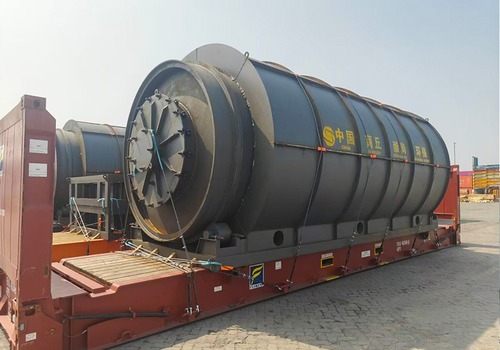
PyrolysisUnit is based in Henan Province, China, rather than being a Europe-based manufacturer. For buyers who are open to international equipment suppliers as well as European specialists, the PyrolysisUnit equipment catalogue provides a separate set of configurations for comparison.
The appropriate comparison is not simply European versus non-European. Buyers should evaluate delivered scope, relevant operating references, technical documentation, after-sales support, and responsibility for project performance under the same requirements.
What EU Compliance Documents Should Buyers Check?
Regulatory conformity should be evaluated at the correct level. Product conformity, environmental permitting, and the operating conditions of an individual industrial installation are related but distinct matters.
CE Marking and Product Conformity
Where the applicable EU product legislation requires CE marking, the manufacturer must identify the relevant requirements, complete the appropriate conformity assessment, maintain supporting technical documentation, and prepare the required EU Declaration of Conformity. CE marking should not be treated as a universal certificate that automatically applies to every component or industrial project.
For a plant made up of multiple machines and auxiliary systems, request the conformity documents applicable to the supplied equipment and clarify who is responsible for the completed assembly and any integration work.
Check the official EU CE-marking guidance for the product-specific requirements.
Industrial Emissions and Site Permitting
The revised Industrial and Livestock Rearing Emissions Directive, commonly referred to as IED 2.0, entered into force on 4 August 2024. It establishes an updated framework for industrial emissions, with environmental permits granted to relevant installations by national permitting authorities.
However, a supplier should not promise that a pyrolysis plant is automatically compliant with IED requirements without defining the applicable activity, installation scope, operating conditions, and emissions limits. Whether the framework applies to a particular facility depends on the applicable rules and the project’s classification.
Before choosing a site, confirm the relevant national and local environmental approval route, the required emissions assessment, and the responsibilities for demonstrating compliance during operation. Start with the European Commission’s IED 2.0 information, then confirm the requirements with the authority responsible for the proposed project.
A manufacturer’s declaration, CE marking, or standard gas-treatment package should not be confused with the environmental permit for the complete facility.
What Should Be Included in a Technical Request for Proposal?
Once two or three suppliers have been shortlisted, send each one the same technical brief. This creates a more useful comparison than requesting an unspecified “price for a pyrolysis plant.”
- Feedstock information: material source, composition, moisture, contamination, particle size, expected variation, and available laboratory results.
- Capacity basis: required feed input per day or hour, operating schedule, number of operating days, and whether the figure refers to wet or dry feed.
- Product requirements: the expected uses of oil, char, biochar, recovered carbon-rich solids, gas, or other output streams, together with relevant quality specifications.
- Process scope: pretreatment, reactor, heating, feeding, condensation, product storage, gas handling, emissions control, and residue management.
- Performance basis: the feedstock, operating conditions, measurement method, and acceptance criteria behind any throughput or product-yield guarantee.
- Compliance documentation: applicable product conformity documents, proposed emissions-control information, technical drawings, and documents needed for the project’s environmental application.
- Commercial responsibilities: manufacturing, shipping, installation, commissioning, operator training, spare parts, warranty coverage, and the party responsible for each item.
For a deeper supplier-screening process, see our separate guide on how to find quality pyrolysis plant manufacturers. This article focuses on the European technology landscape, while the supplier-selection guide deals with how to verify a specific quotation and vendor.
Frequently Asked Questions
Who is the best pyrolysis plant manufacturer in Europe?
There is no universal best supplier for every feedstock and project. Tire thermolysis, plastic chemical recycling, and biomass carbonization have different process requirements. The most suitable company is the one whose proven technology and contractual scope match the material, capacity, product specifications, and project constraints.
Are European pyrolysis technology providers all equipment manufacturers?
No. Some companies manufacture or supply equipment, while others develop proprietary technology, license a process, operate their own plants, or provide integrated plant solutions. Confirm the supplier’s exact role and the contracting entity before placing an order.
Can a biomass pyrolysis plant process waste tires or mixed plastics?
Not automatically. Biomass carbonization systems may be designed for specific organic feedstocks, whereas tire thermolysis and plastic chemical recycling require different process conditions and handling arrangements. Any change in feedstock needs to be confirmed by the supplier and supported by appropriate technical evidence.
Does CE marking prove that a pyrolysis plant has environmental approval?
No. CE marking relates to the applicable EU product-conformity requirements. Environmental approval for the operating facility is a separate matter and must be confirmed with the competent permitting authority.
Should I choose a supplier with the highest advertised product yield?
Not on yield alone. Ask how the yield was measured, what material was tested, whether the feed basis was wet or dry, what operating conditions were used, and whether the resulting product meets the intended buyer’s specification.
Explore Pyrolysis Equipment for Your Project
The European market includes technology specialists for tires, plastics, biomass, and other defined feedstocks. The most effective shortlist begins with the intended material and output, followed by a review of technical evidence, equipment scope, conformity documentation, and the supplier’s project responsibilities.
For a broader view of international suppliers, see our guide to top pyrolysis equipment manufacturers. To review equipment configurations offered by PyrolysisUnit, visit the pyrolysis machine catalogue.
If you are assessing an international supplier for a European project, prepare your feedstock specifications, target capacity, site location, and required documentation before requesting a proposal.