

Planning a pyrolysis plant in the Philippines starts with a local question: where will the feedstock come from, how will it reach the facility, and who will accept the recovered products? The answers can differ substantially between an industrial site serving a single regional supply network and a project that depends on waste collected across multiple islands.
For recycling businesses, industrial operators, waste management companies, and project developers, a successful pyrolysis project needs more than suitable machinery. It requires a clearly defined waste stream, realistic transport arrangements, appropriate environmental controls, reliable product testing, and a business model that reflects local operating conditions.
This guide examines the Philippine-specific decisions that deserve attention before equipment procurement, including regional feedstock networks, local government partnerships, plastic packaging recovery programs, weather resilience, and the practical requirements for bringing a waste-to-fuel facility into operation.
1. Identify the Waste Stream Your Plant Will Actually Serve
The Philippines does not have a single, uniform waste stream. The material available to a project depends on the surrounding industries, collection systems, consumer activity, existing recyclers, and commercial value of recoverable materials.
Instead of starting with a national waste-generation estimate, define the specific material your proposed facility will receive. A plant designed for end-of-life tyres, for example, has different receiving and pretreatment requirements from a facility processing selected post-consumer plastics.
| Potential feedstock | Where to investigate supply | What makes it suitable for further evaluation |
|---|---|---|
| End-of-life tyres | Tyre shops, fleet maintenance operators, vehicle service businesses, tyre collectors, and regional waste handlers. | Verifiable quantities, consistent composition, manageable contamination, and a practical collection route. |
| Selected waste plastics | Packaging converters, industrial manufacturers, plastic recovery facilities, commercial waste aggregators, and eligible collection programs. | Identifiable polymer composition, appropriate preparation, sufficient volume, and a process designed for the specified material. |
| Rubber processing residues | Rubber product manufacturers and businesses handling suitable rubber scrap. | Known material composition, consistent particle size, acceptable contamination levels, and compatible feeding requirements. |
| Mixed residual materials | Commercial waste operators and other organizations managing residual waste after recovery activities. | A documented material audit proving that a defined, technically suitable fraction can be separated from unsuitable or recyclable material. |
Do not assume that unsorted municipal solid waste can be fed directly into a conventional tyre or plastic pyrolysis machine. The presence of food waste, water, soil, metals, PVC, and unidentified materials can change process requirements, product quality, residue handling, and environmental controls.
For a tyre-focused project, review the specifications of a tyre pyrolysis plant. For a project using appropriately selected plastic waste, compare the requirements of a plastic pyrolysis plant.
2. Build a Regional Feedstock Network Around a Defined Service Area
In the Philippines, transport planning can determine whether a theoretically available waste stream is commercially accessible. A supplier may have sufficient waste on paper, but the delivered material may become too expensive if it requires repeated port handling, long-distance transfers, additional storage, or several collection vehicles.
A better approach is to map supply within a defined operating area before committing to a large processing capacity. Treat Luzon, the Visayas, and Mindanao as separate regional planning areas unless a documented logistics study shows that moving material between them is justified.
Luzon: Investigate industrial and urban collection networks
For a proposed facility serving Luzon, investigate the actual supply available through nearby industrial businesses, commercial waste handlers, tyre collectors, and recycling operators. The relevant question is not simply how much waste a city produces, but how much of the target material can be contracted and delivered to the proposed plant.
Compare the cost of collecting material from multiple smaller suppliers with the cost of contracting a larger industrial generator. A central collection point may simplify receiving operations, but only if it does not introduce excessive transport, sorting, or storage costs.
The Visayas: Evaluate the complete island-to-plant route
For projects serving the Visayas, determine whether the target waste is concentrated around one island or distributed across several collection areas. If shipping or inter-island transfer is required, include the port, vessel, loading, unloading, road transport, and temporary storage arrangements in the feedstock calculation.
A supply arrangement that depends on material arriving from multiple islands should have a clear delivery schedule and contingency plan. Do not size the reactor using the combined nominal waste availability until you have established how much material can reliably reach the facility during ordinary and disrupted transport conditions.
Mindanao: Assess regional supply and existing recovery activities
For Mindanao-based projects, establish whether the target material can be collected from a commercially useful local radius. Potential suppliers should be assessed individually rather than assuming a uniform waste supply across the region.
Also investigate whether existing recyclers or other waste treatment operators already purchase the material you intend to process. Their activities may indicate a supply network worth partnering with, or they may compete for the same feedstock.
The locations above are regional investigation frameworks, not claims that a particular city or island automatically has enough suitable feedstock to support a profitable pyrolysis plant.
3. Work With LGUs, Materials Recovery Facilities, and Waste Collectors
One of the most useful steps for a Philippine waste recovery project is to understand how material is currently collected, sorted, transferred, and sold. The Ecological Solid Waste Management Act of 2000, Republic Act No. 9003, establishes a framework for ecological solid waste management and assigns important responsibilities to local government units (LGUs).
For a proposed project, local relationships may be as important as the reactor specification. Depending on the feedstock, potential counterparties include:
- Local government units: Discuss the project’s intended material stream, proposed location, local waste management arrangements, and any applicable procurement or contractual requirements.
- Materials recovery facilities: Determine which plastics or other eligible materials remain available after reuse and conventional recovery, and whether the material meets your process specification.
- Waste collection and aggregation businesses: Confirm collection capacity, collection schedules, weighing arrangements, contamination limits, and responsibility for rejected loads.
- Industrial waste generators: Explore longer-term supply arrangements for consistent production scrap or other suitable waste streams.
Do not assume that an LGU will provide waste free of charge or that a facility will receive an exclusive supply contract. Any proposed arrangement should define material ownership, pricing, volume commitments, quality limits, collection responsibility, and the conditions under which either party can suspend deliveries.
You should also respect the existing waste hierarchy and commercial recycling market. Material that can be reused or conventionally recycled should not automatically be diverted into pyrolysis simply because the plant needs additional feedstock.
For the full legal text, consult Republic Act No. 9003. Work with the relevant LGUs and qualified local advisers to determine how the law and applicable local programs affect your specific project.
4. Understand What Plastic Packaging EPR Can—and Cannot—Provide
For plastic-focused projects, the Philippines’ Extended Producer Responsibility Act of 2022, Republic Act No. 11898, is relevant to the wider recovery and management of plastic packaging waste. The law amends the country’s ecological solid waste management framework and establishes obligations for covered producers.
This creates a reason for a project developer to investigate partnerships with eligible recovery programs, packaging businesses, collection organizations, and other participants in the plastic waste value chain. However, the existence of EPR legislation does not guarantee that a pyrolysis facility will receive waste or qualify automatically as a recognized recovery destination under every program.
Before including EPR-related material in your financial forecast, verify the following:
- Whether the material is included in the relevant recovery program.
- Whether the proposed processing route and destination meet the program’s applicable requirements.
- What documentation is necessary to demonstrate collection, transfer, treatment, and any required recovery outcomes.
- Whether a commercial contract or formal partnership exists and what volume it actually commits.
- Who pays for collection, transport, sorting, and processing, and how those payments are calculated.
Use Republic Act No. 11898 as a starting point for legal research, then confirm any project-specific requirements with the relevant authorities and program participants.
5. Learn From a Documented Philippine Pyrolysis Project
A useful local reference is the pyrolysis facility associated with Green Planet Renewable Energy Corp. (GPREC) in Naawan, Misamis Oriental. According to the Department of Science and Technology’s regional office, GPREC partnered with DOST-X to refurbish a pyrolysis plant that converts used tyres and plastics into industrial fuel oil. The facility was inaugurated on January 10, 2025.
Read the official report: Green Planet Corp inaugurates DOST-funded renewable energy processing plant in Misamis Oriental.
This example is useful because it demonstrates a documented Philippine application involving actual waste streams and a local institutional partner. It also gives project developers a concrete reference point when preparing questions for equipment suppliers and local stakeholders.
Nevertheless, the project should not be treated as proof that every proposed installation will have the same equipment configuration, operating performance, market access, or regulatory status. Its existence does not establish a guaranteed oil yield or investment return for a new facility.
When examining any local or international reference project, look for the installation date, feedstock composition, processing capacity, actual operating history, product quality, and evidence that the reported facility is performing the process you intend to purchase.
6. Design for Humidity, Heavy Rain, and Transport Disruptions
Plant design should account for the site conditions that can interrupt the movement and handling of waste. A facility that relies on outdoor storage or infrequent deliveries may be vulnerable to heavy rain, water accumulation, damaged access roads, or interruptions affecting transport services.
The appropriate safeguards depend on the site and local risk assessment, but several issues deserve attention during the engineering stage.
Protect incoming material and maintain consistent quality
Plan covered storage for feedstock that requires moisture control. Keep drainage and contaminated runoff management separate from clean stormwater handling, and ensure that materials are stored in a way that supports safe vehicle access and fire protection.
Where incoming material changes with the weather or supplier, establish acceptance checks for moisture, dirt, foreign objects, material composition, and other relevant properties. Feedstock that does not meet the agreed specification should be held for assessment instead of being mixed automatically into the normal production stream.
Review the complete utility and cooling arrangement
Ask the equipment supplier to identify electrical loads, process heating requirements, cooling water requirements, and the supporting equipment needed for the proposed configuration. Confirm that the local site can supply these utilities under normal operation and during foreseeable interruptions.
The supplier should also explain how the system responds to loss of power, abnormal pressure, cooling interruptions, and an emergency shutdown. Obtain the relevant operating procedures and safety documentation rather than relying on a general statement that the equipment is suitable for tropical climates.
Plan for shipping delays and critical spare parts
For equipment and components sourced internationally, identify the parts that could prevent the plant from operating if a replacement is delayed. Establish which components can be sourced locally, which must be imported, and which spare parts should be held at the facility.
A practical maintenance and spare-parts plan is especially important for a plant located away from the supplier’s technical team or dependent on long-distance freight. Review the available after-sales service arrangements when comparing suppliers.
7. Select a Plant Configuration That Fits the Delivery Pattern
The right processing configuration depends not only on daily tonnage but also on how the material arrives, how much preparation it needs, and how the facility will manage interruptions.
| Operating situation | Configuration to investigate | Important verification |
|---|---|---|
| A smaller, localized feedstock network with staged deliveries | A small-scale or batch system may warrant evaluation. | Confirm the complete batch cycle, cooling and discharge time, actual operating throughput, and labor requirements. |
| Regular deliveries of prepared material with a need for a more structured production flow | A semi-continuous configuration may be worth comparing. | Establish which steps remain batch-operated, which steps are automated, and how feeding and discharge are managed. |
| A larger supply network supported by consistent prepared feedstock | A continuous system may be appropriate for further technical assessment. | Verify the feedstock specification, minimum operating conditions, maintenance plan, shutdown arrangements, and spare-parts support. |
Do not choose a machine solely because it has a higher advertised daily capacity. A large reactor cannot compensate for inconsistent deliveries, unsuitable feedstock, insufficient pretreatment, or a lack of buyers for the products.
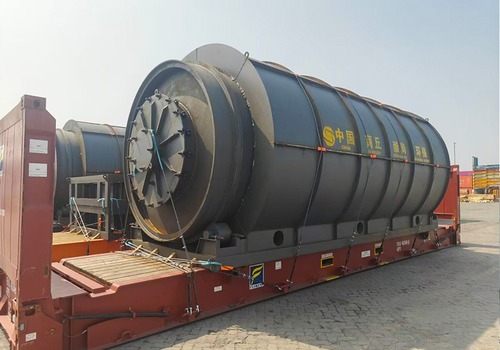
Start with the PyrolysisUnit product directory to review the wider equipment range.
Then compare a small pyrolysis machine, a batch pyrolysis plant, or a semi-continuous pyrolysis plant as appropriate for your application.
For more information on the technical trade-offs, see Batch vs. Continuous Pyrolysis Plant: How to Choose the Right One.
8. Establish Product Acceptance Before Designing for Revenue
A plant’s commercial value depends on whether its actual products can meet a buyer’s requirements. It is not enough to calculate a theoretical output quantity and assume that every tonne can be sold at a quoted market price.
Before finalizing the equipment configuration, speak with potential industrial users or other qualified buyers about the specifications they require. Where appropriate, use representative samples and independent laboratory testing to determine whether the proposed process can produce an acceptable material.
Pyrolysis oil
Do not assume that crude pyrolysis oil is interchangeable with conventional diesel or commercial fuel oil. Its composition and suitability depend on the feedstock and process. Buyers may require information about water, sediment, viscosity, sulfur, heating value, stability, or other properties relevant to their equipment and applicable rules.
Ask prospective buyers to identify their acceptance criteria before relying on a particular sale price. Confirm the required storage, loading, transport, and handling arrangements as part of the commercial assessment.
Solid char and recovered carbon products
The solid residue produced during tyre pyrolysis should not automatically be described as specification-grade recovered carbon black. Additional processing, characterization, and quality control may be needed before it can meet a particular buyer’s requirements.
Likewise, the steel recovered from tyre processing should be evaluated according to its cleanliness, separation quality, and the requirements of the intended scrap buyer.
Non-condensable process gas
Non-condensable gas may be used within a suitably designed process heating system, subject to the equipment’s actual configuration and safety requirements. Do not include projected revenue from gas sales or power generation unless a specific, technically feasible and commercially supported arrangement exists.
The goal is to establish a realistic product specification and destination for every major output, including residues that require further treatment or controlled disposal.
9. Verify Environmental and Local Approval Requirements
Environmental review is a project-specific task. A process description alone does not establish that a proposed facility can operate at a particular Philippine site, and the use of pyrolysis does not remove the need to evaluate the facility’s actual environmental impacts.
Several parts of the Philippine regulatory framework may be relevant:
- Solid waste management: Republic Act No. 9003 establishes the country’s ecological solid waste management framework. The project’s relationship with waste generators, collectors, local government programs, and treatment or disposal routes should be reviewed accordingly.
- Air pollution control: Republic Act No. 8749, the Philippine Clean Air Act of 1999, provides the framework for air pollution control. Determine which emission sources, pollution control equipment, monitoring measures, and permits apply to the actual installation.
- Plastic packaging recovery: Republic Act No. 11898 may be relevant to commercial partnerships involving covered plastic packaging recovery programs. Confirm the specific obligations and requirements applicable to each participant.
- Environmental assessment: Ask the Environmental Management Bureau (EMB) or the relevant authority whether the proposed facility is covered by the Philippine Environmental Impact Statement System and whether an Environmental Compliance Certificate (ECC) is required.
- Operating and local approvals: Confirm applicable permits for air pollution sources and control facilities, local zoning, building works, fire safety, utilities, waste handling, and other site-specific obligations.
The Clean Air Act does not mean a supplier’s equipment is automatically compliant. The EMB’s formal process for a Permit to Operate air pollution sources and corresponding pollution control facilities explains the relevant permit process for sources subject to the applicable requirements.
For the full text of the Philippine Clean Air Act of 1999, consult the official legal text hosted by Lawphil. Confirm the project’s actual obligations with the relevant environmental authority and appropriately qualified local advisers before construction or equipment installation.
10. Assess the Economics Using Delivered Material and Verified Sales
For a Philippine project, the cost of obtaining material at the plant gate may be very different from its nominal purchase price. A realistic model should account for the entire movement of feedstock from the generator or collection point to the processing line.
Calculate the delivered cost of usable material using the applicable purchase, collection, sorting, loading, road or sea freight, port handling, storage, and unloading costs. Include the effect of moisture, contamination, rejected loads, and material that requires extra preparation.
For product revenue, use the quantities and prices supported by the actual process configuration, representative test results, and realistic buyer requirements. Separate the assumptions for each product rather than treating all potential outputs as equally marketable.
Your model should also include maintenance, utilities, labor, consumables, residue handling, insurance where applicable, and downtime caused by supply or logistics interruptions. For a preliminary screening exercise, compare conservative, base, and optimistic operating assumptions.
The pyrolysis plant investment cost guide can help structure the initial cost categories. You can also use the Pyrolysis Plant ROI Calculator to organize a preliminary estimate.
Neither a generic equipment price nor an illustrative return-on-investment calculation substitutes for local freight quotations, a documented feedstock agreement, verified product specifications, or a project-specific financial assessment.
11. Information to Prepare Before Requesting a Supplier Proposal
To help a supplier assess the application accurately, assemble the information that defines the waste stream and the proposed operating environment.
- Feedstock identity: State whether the material consists of used tyres, selected plastics, rubber residues, or another defined waste stream.
- Material evidence: Provide representative photographs, composition information, sample analysis where available, and known contamination or moisture issues.
- Supply arrangements: State the estimated available quantity, delivery schedule, collection locations, transport route, and whether supply agreements have been secured.
- Site information: Include the proposed location, available footprint, access restrictions, power supply, cooling arrangements, storage provisions, and relevant weather or drainage concerns.
- Operating requirements: State the target processing capacity, preferred operating schedule, available labor, and planned pretreatment.
- Output requirements: Describe the intended product destinations and the quality criteria confirmed by prospective buyers.
- Environmental review: Provide the status of the local regulatory assessment and identify the approvals that remain to be confirmed.
- Quotation scope: Request a clear equipment list, exclusions, technical specifications, commissioning tests, warranty terms, training, spare parts, and after-sales service arrangements.
Ask suppliers to distinguish documented performance data from design estimates. If a specific oil yield, throughput, or operating performance is essential to the business case, agree in advance on how it will be measured, under what feedstock conditions, and what contractual acceptance criteria apply.
Frequently Asked Questions About Pyrolysis Plants in the Philippines
Where should I start when planning a pyrolysis plant in the Philippines?
Start by identifying a specific waste stream and verifying its supply within a practical service area. Establish collection and transport arrangements, confirm potential product buyers, and begin the site-specific environmental review before finalizing equipment capacity.
Can a pyrolysis plant use municipal solid waste collected by an LGU?
Not every fraction of municipal solid waste is suitable for a conventional pyrolysis machine. The material needs to be assessed and separated as required. A proposed arrangement with an LGU should clearly identify the eligible waste stream, quality specifications, supply obligations, and the applicable regulatory requirements.
Does the Philippine EPR Act guarantee a supply of plastic waste?
No. Republic Act No. 11898 establishes an extended producer responsibility framework for plastic packaging waste, but it does not guarantee feedstock for an individual plant. A project must verify whether a relevant recovery program exists, whether its processing route is eligible, and whether a supply or service agreement is in place.
Is pyrolysis automatically permitted because it operates with limited oxygen?
No. The process description alone does not establish regulatory approval. The proposed facility must be assessed under the applicable solid waste, air pollution, environmental assessment, and local approval requirements. Confirm the actual obligations with the relevant Philippine authorities.
Is there a documented pyrolysis project in the Philippines?
Yes. DOST Northern Mindanao reported the inauguration of a GPREC pyrolysis facility in Naawan, Misamis Oriental, on January 10, 2025. The reported application involved used tyres and plastics and the production of industrial fuel oil. This is a local reference, not a guarantee of the performance or commercial results of another project.
How can I compare pyrolysis plant suppliers?
Compare the proposed equipment scope, tested feedstock compatibility, documented processing capacity, emission-control design, product testing, commissioning criteria, warranty, operator training, spare-parts availability, and after-sales support. A quotation should identify what is included and what must be supplied locally.
Discuss Your Pyrolysis Project in the Philippines
The right pyrolysis solution depends on the feedstock available in your operating area, the logistics needed to deliver it, the requirements of local authorities, and the products that prospective buyers are prepared to accept.
Before selecting equipment, prepare a short description of your material, estimated supply volume, collection and transport arrangements, site conditions, and intended product applications. These details provide a more useful starting point for technical discussions than a request based on capacity alone.
To discuss a proposed configuration and request further equipment information, contact the PyrolysisUnit team with your project requirements.