

Planning a pyrolysis plant in Malaysia starts with a clear decision about the material to be processed. Waste tires, mixed plastics, palm oil mill residues, and industrial oil sludge have different physical and chemical properties, so they do not automatically fit the same reactor or produce the same recoverable products.
Malaysia also presents project-specific considerations that should be addressed before equipment selection. Palm oil mills may already have established uses for some solid residues, plastic feedstocks can vary significantly in composition, and environmental assessment requirements may differ between Peninsular Malaysia, Sabah, and Sarawak.
This guide explains how to evaluate a pyrolysis project in Malaysia by matching the feedstock to the process, identifying the relevant approval pathway, planning for downstream product acceptance, and selecting equipment based on the actual operating requirements rather than generic yield or investment claims.
Which Feedstock Makes Sense for a Pyrolysis Plant in Malaysia?
A national waste-volume estimate does not establish how much material a particular factory can obtain. A project needs to identify the actual waste generator, the quantity available to the plant, the material’s condition, competing uses, and the requirements for collecting and transporting it.
For Malaysia, four feedstock groups deserve separate consideration.
1. Palm Oil Mill Residues: Evaluate Each Material Separately
Malaysia’s palm oil industry generates several types of residual material, including empty fruit bunches (EFB), palm kernel shells (PKS), and mesocarp fibres. These materials differ in moisture, structure, ash content, handling characteristics, and existing uses. They should not be combined into a single assumed feedstock category during equipment selection.
Empty fruit bunches: EFB is a bulky, fibrous solid that may require size reduction, moisture management, and a suitable feeding arrangement. Before considering thermal conversion, establish the available quantity after existing mill uses, the condition of the material when collected, and the moisture range delivered to the plant.
Palm kernel shells and mesocarp fibres: These are different from EFB in physical form and may already be used for process heat or other applications. A project must verify the surplus actually available to it rather than assume that all generated residues can be purchased at a low price.
Palm oil mill effluent (POME): POME is a wastewater stream, not a dry solid feedstock. It should not be treated as if it can be fed directly into a conventional solid-biomass pyrolysis reactor. If a project involves POME, it needs a separate assessment of wastewater treatment, solids recovery, moisture removal, and the suitability of any recovered solids for the intended thermal process.
These distinctions matter because a system designed for dry, prepared biomass may not be suitable for wet, fibrous material without substantial pretreatment. Likewise, a biomass process intended to recover char is not necessarily configured for the same product objectives as a tire or plastic pyrolysis plant.

Photo by CEphoto, Uwe Aranas.
Licensed under
CC BY-SA 3.0.
Original image and attribution details.
2. End-of-Life Tires: Supply Consistency and Product Specifications
A tire pyrolysis project depends on more than the estimated number of discarded tires in the country. The project developer needs to establish which suppliers can provide material regularly, how much can be collected within a practical transport radius, and whether tires arrive whole, shredded, contaminated, or mixed with other rubber waste.
The process layout should account for tire preparation where required, wire removal, feeding, reactor operation, oil condensation, char collection, steel handling, and the management of exhaust and other process streams.
Recovered oil and carbon-rich solids also need defined destinations. A buyer’s technical requirements should be identified before the project assumes that the outputs can be sold as industrial fuel or substituted for a particular grade of virgin carbon black.
For an equipment overview, see the waste tire pyrolysis plant page.
3. Waste Plastics: Identify Polymer Composition Before Choosing a Reactor
A plastic supply described simply as “mixed waste plastic” is not a sufficient technical specification. Polyethylene (PE), polypropylene (PP), polystyrene (PS), PET, PVC, multilayer packaging, and contaminated plastic waste can behave differently during thermal treatment.
Before requesting a quotation, estimate the polymer mix, moisture, dirt and other contaminants, particle size, and expected variations between deliveries. Chlorine-containing materials such as PVC require particular attention because thermal processing can create corrosive and hazardous compounds. The feedstock acceptance limits and necessary separation or pretreatment steps should be defined for the proposed process.
The appropriate configuration should be selected only after the supplier confirms its suitability for the actual feedstock. Review the plastic pyrolysis plant range for relevant equipment configurations.
4. Industrial Oil Sludge and Other Process Residues
Oil sludge and industrial residues require individual characterization because water, mineral solids, metals, sulfur, halogens, and other contaminants can affect the equipment design and the handling of recovered products and residues.
Before selecting a process, identify the material’s source, legal classification, chemical characteristics, and intended treatment route. Confirm the applicable waste-handling and transport rules with the relevant authorities. A standard equipment specification should not be treated as approval to accept any industrial waste stream.
How to Match Malaysian Feedstocks to the Right Process
Rather than starting with a preferred reactor model, prepare a feedstock-specific design basis. The following table highlights the questions that should be answered first.
| Feedstock | Key Technical Questions | Important Project Consideration |
|---|---|---|
| Empty fruit bunches | What are the moisture range, fibre characteristics, ash content, and required particle size? | Drying demand, material handling, storage, existing mill uses, and intended char or liquid product. |
| Palm kernel shells or mesocarp fibres | What quantity is genuinely available, and what are the material’s size and moisture characteristics? | Existing use for process heat or other products, collection cost, and the value of alternative uses. |
| Waste tires | What tire types, size range, contamination levels, and preparation requirements apply? | Collection agreements, wire handling, stable supply, and buyer specifications for recovered oil and solids. |
| Waste plastics | Which polymer types are present, and what contaminants or halogen-containing materials may enter the line? | Sorting, pretreatment, corrosion control, emissions treatment, and acceptable product composition. |
| Oil sludge | What are the water content, ash, chemical contaminants, and legal classification? | Material compatibility, emissions and residue controls, and the approvals applicable to the treatment facility. |
These are screening questions, not fixed equipment specifications. The supplier should propose a process only after reviewing the feedstock data and the required outputs. If the material varies significantly, representative sampling and testing may be necessary before the design is finalized.
Environmental Approval for a Pyrolysis Plant in Malaysia
Malaysia’s environmental approval process must be checked against the actual project activity and location. It is not safe to assume that every plant requires exactly the same assessment, or that one approval automatically covers land use, construction, waste treatment, emissions, and operation.
Environmental Impact Assessment (EIA)
The Department of Environment (DOE) explains that an EIA is required when a proposed project falls within the prescribed activities under the Environmental Quality (Prescribed Activities) (Environmental Impact Assessment) Order 2015. Sabah and Sarawak have state-level environmental legislation governing certain prescribed activities, so projects in those states should not rely solely on the framework used for Peninsular Malaysia.
Another important distinction is that approval of an EIA report is not the same as approval of the entire project. The responsible planning or licensing authority may need to grant additional approvals.
Before purchasing equipment or finalizing the site, review the official Malaysia DOE EIA guidance and seek confirmation of the applicable assessment route from the competent authority.
Scheduled Waste and Waste Treatment Facilities
The classification of the incoming material matters. Malaysian scheduled-waste requirements apply to wastes covered by the relevant legal framework; it should not be assumed that every material described commercially as waste tires, plastic waste, biomass residue, or oil sludge has the same classification.
Where scheduled waste is involved, confirm the applicable requirements for generation, storage, transport, recovery, treatment, and disposal. The Department of Environment explains that scheduled-waste handling is governed by the Environmental Quality Act 1974 and the Environmental Quality (Scheduled Wastes) Regulations 2005, and that regulated recovery or disposal must follow the applicable licensing requirements.
Check the official DOE scheduled-waste information before defining the scope of a waste-treatment project.
Air Emissions and Process Safety
Environmental-control requirements should be based on the actual process, feedstock composition, combustion or heating system, and applicable conditions of approval. The equipment design may need to address particulate matter, acid-gas constituents, odors, process-gas handling, and other contaminants relevant to the material being treated.
The proposed control system should be reviewed as part of the complete process design. Request the equipment list, design basis, operating requirements, monitoring provisions, maintenance schedule, and any available performance-test documentation. Do not treat a generic claim that a plant is “environmentally friendly” as evidence that it complies with Malaysian requirements.
Where scheduled waste is involved, determine which additional licensing or operating conditions apply to the facility. The correct pathway must be confirmed for the actual project; a manufacturer cannot establish the site’s legal status simply by supplying a scrubber or gas-treatment unit.
Should a Malaysian Project Include Palm Biomass, Tires, and Plastics in One Plant?
It can be tempting to combine multiple feedstocks to increase utilization throughout the year. However, combining materials is not automatically the most efficient design decision.
EFB, palm kernel shells, waste tires, and mixed plastics differ in physical form, moisture, chemistry, handling requirements, and product composition. A system designed for one feedstock may need significant changes before it can handle another. Frequent switching between materials can also complicate process control, cleaning, product segregation, and quality assurance.
Before designing a multi-feedstock facility, compare three options:
- Dedicated line: A process configured for a relatively consistent feedstock and specific product requirements.
- Separate processing lines: Different feedstocks handled by different preparation and treatment systems, with suitable shared utilities where practical.
- Flexible feedstock operation: A system designed and tested for a defined range of accepted materials, with documented limits and changeover procedures.
For each option, compare actual feed availability, preparation costs, operating schedule, required product quality, and regulatory responsibilities. Do not assume that a general-purpose reactor eliminates the need for feedstock segregation or separate testing.
What Does a Malaysia Pyrolysis Plant Case Study Prove?
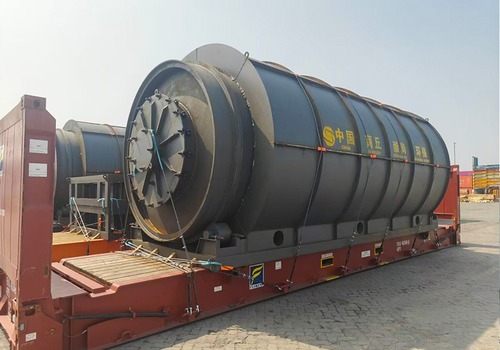
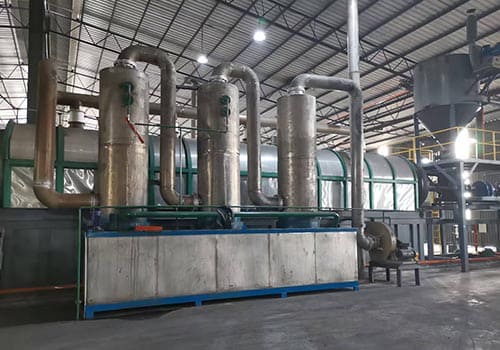
PyrolysisUnit has published a 48 TPD waste tire pyrolysis project in Malaysia, describing four 12-ton batch units supplied to a Malaysian customer.
The case study can be used as a starting point for understanding the described equipment configuration and project scope. It should not be treated as an independent national performance benchmark or proof that another project will achieve the same throughput, yield, revenue, or payback period.
Before using a project reference in an investment decision, verify the basis of its capacity, operating days, feedstock conditions, product sales specifications, actual buyer prices, operating costs, environmental-control requirements, and any financing or site costs not included in the headline figures.
A well-documented case study should help the buyer ask more precise questions about equipment and project requirements. It should not replace a material-specific feasibility assessment for the proposed Malaysian site.
Choosing Between Batch and Continuous Pyrolysis Equipment
The required feedstock and operating schedule should guide the choice between batch, semi-continuous, and continuous equipment. These configurations have different feeding, discharge, maintenance, staffing, and material-handling requirements.
A batch system may suit projects that process material in planned cycles and can accommodate loading, cooling, and unloading intervals. Semi-continuous and continuous systems may be appropriate when the feedstock is sufficiently prepared and the supply chain can support the required operating schedule.
For example, a continuous system designed for pretreated tire or rubber material should not be assumed to process raw EFB or mixed plastics without a separately validated design. Biomass systems also require consideration of fibre handling, moisture, and the desired product type.
Review the available batch pyrolysis plant, continuous pyrolysis plant, and biomass pyrolysis equipment pages. The final model should be confirmed against the actual material and project requirements.
Product Acceptance: Confirm Buyers Before Finalizing the Process
Recovered products are only useful when they meet the needs of an identified downstream user or have a suitable, compliant management route. Before finalizing the reactor design, determine how each output will be tested, stored, transported, and accepted.
Recovered Oil
For tire or plastic pyrolysis, establish the buyer’s requirements for properties such as water content, viscosity, sulfur, calorific value, and other feedstock-dependent characteristics. A pyrolysis oil product is not automatically equivalent to road diesel or another finished fuel. Further treatment may be required, depending on its intended use and applicable specifications.
Carbon-Rich Solid Products
Recovered carbon black from waste tires and char from biomass are different products and should not be treated as interchangeable. Their composition, ash content, particle properties, contaminants, and suitability for an application need to be assessed separately.
If the intended customer operates in the rubber, plastic, construction, or agricultural sector, ask for the relevant product specification and required tests before assuming that the recovered solid will be accepted.
Gas and Other Residual Streams
Non-condensable gas may be used for process heating where the design, gas composition, safety provisions, and operating conditions allow. This does not guarantee that every plant can operate without external energy. The project must account for pretreatment, drying, auxiliary power, heat losses, and the energy needed by the environmental-control system.
Collected dust, wastewater, rejected feedstock, and other residues should also be included in the treatment plan. A project proposal that evaluates only the saleable output streams may overlook important operating and compliance requirements.
Investment Incentives: Verify Eligibility Before Budgeting
Malaysia offers green-technology investment incentives in defined categories, but eligibility should be checked against the current programme rules and the specific project activities. Do not assume that buying a pyrolysis machine automatically qualifies a company for a tax allowance or that the same incentive applies to every feedstock and business model.
Before including an incentive in the financial model, confirm the applicable criteria, qualifying expenditure, application timing, required approvals, and any conditions attached to the proposed activity with the Malaysian Investment Development Authority (MIDA). Start with the official MIDA green-technology information.
For a detailed discussion of equipment costs and project budgeting, see our separate pyrolysis plant cost guide. That article covers cost categories in greater detail; this Malaysia guide focuses on feedstock fit, project approvals, and local implementation requirements.
Malaysia Pyrolysis Plant Project Checklist
Before requesting a final equipment quotation, prepare the following project information:
- Location: proposed state, local authority area, industrial site, and delivery destination.
- Feedstock: a defined material type, source, available quantity, and expected supply schedule.
- Material properties: moisture, composition, contamination, particle size, and representative laboratory results where available.
- Existing uses: whether the material is already used for process heat, recycling, composting, or another commercial application.
- Environmental route: confirmed waste classification, applicable EIA or other assessment requirements, emissions controls, and treatment or disposal requirements.
- Product outlets: intended buyers, required specifications, sampling methods, and acceptance conditions for each recovered product.
- Equipment scope: feeding, pretreatment, reactor, condensation, gas handling, environmental controls, cooling, storage, and auxiliary systems.
- Project responsibilities: delivery, installation, commissioning, training, testing, documentation, warranty, and local approvals.
If you are still comparing equipment manufacturers, our guide to top pyrolysis equipment manufacturers provides a separate overview of potential suppliers. The Malaysia-specific assessment should then focus on whether the selected proposal is suitable for your feedstock, site, and regulatory requirements.
Frequently Asked Questions About Pyrolysis Plants in Malaysia
What waste materials can a pyrolysis plant in Malaysia process?
Depending on the equipment configuration, potential feedstocks include end-of-life tires, suitable plastic waste, selected biomass residues, and certain industrial residues. Each material requires a separate assessment of composition, preparation, process compatibility, and environmental requirements.
Can empty fruit bunches from palm oil mills be processed in a standard tire pyrolysis plant?
Not without confirming that the equipment is suitable for the material. EFB is a fibrous biomass that may require different feeding, moisture management, and process conditions from waste tires. A dedicated biomass configuration or a technically validated modification may be more appropriate.
Does every pyrolysis project in Malaysia need an EIA?
Not every project follows the same assessment route. The need for an EIA depends on whether the proposed activity is prescribed under the applicable rules, and Sabah and Sarawak have their own state-level provisions for certain activities. Confirm the project’s requirements with the competent authority before finalizing the site.
Can pyrolysis oil be sold as diesel in Malaysia?
Not automatically. Suitability depends on its composition, the intended application, applicable product specifications, and any required upgrading or approval. The target buyer’s acceptance criteria should be established before the equipment and process are finalized.
Does a pyrolysis plant automatically qualify for green investment incentives?
No. Eligibility depends on the current incentive rules and the project’s specific activities and qualifying costs. Confirm the requirements with MIDA before relying on any tax allowance in the investment model.
Discuss Your Pyrolysis Plant Project in Malaysia
A successful project begins by matching the feedstock to the process and defining how the plant will meet its environmental, operational, and product-quality requirements. For Malaysian projects, this may mean assessing palm oil mill residues separately from tires or plastics, confirming the correct approval pathway, and identifying realistic product outlets before selecting a machine.
Prepare your project location, feedstock type, expected daily quantity, available material analysis, intended outputs, and required supply scope before requesting a technical review. This allows the equipment configuration to be assessed against the actual project instead of relying on generic yields or market projections.
Explore the PyrolysisUnit pyrolysis machine range or contact PyrolysisUnit to discuss your Malaysia project.