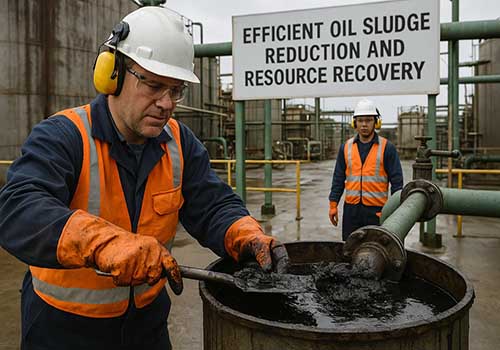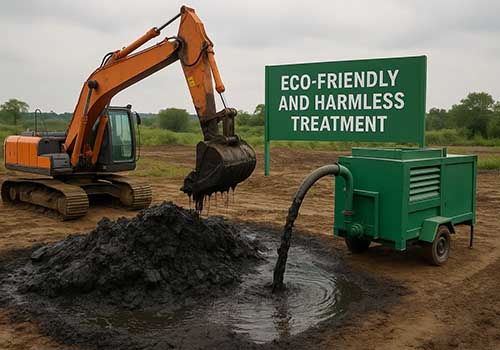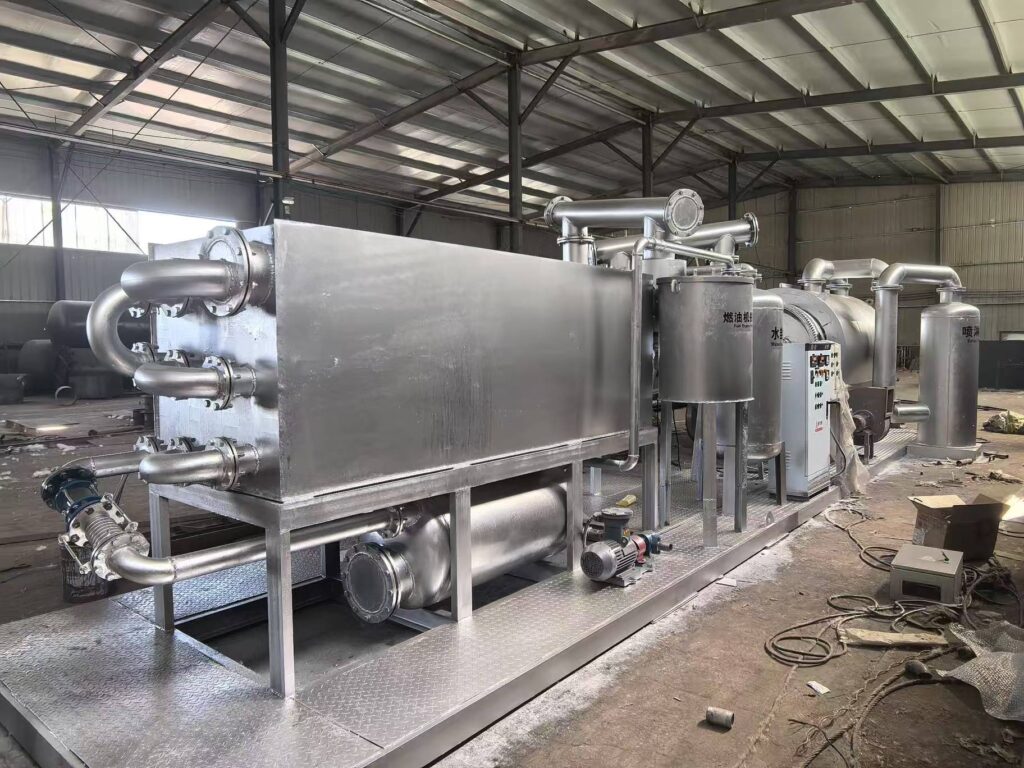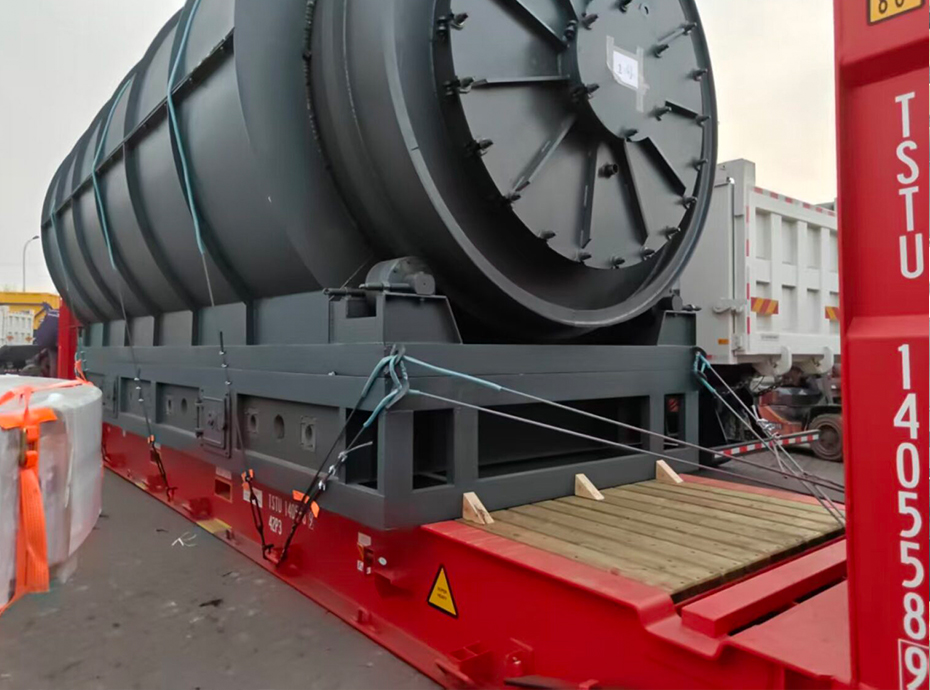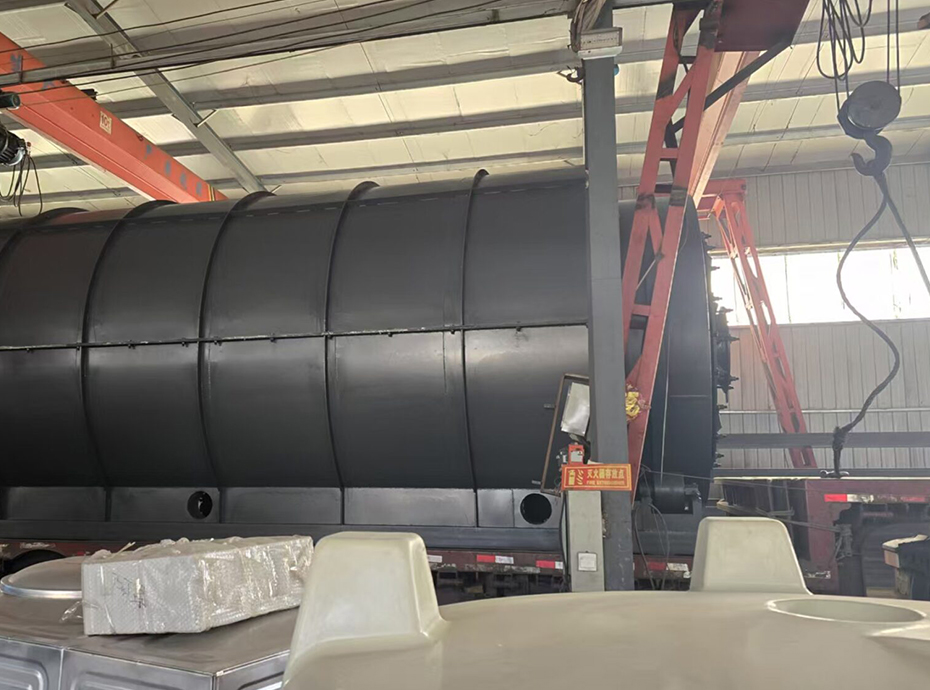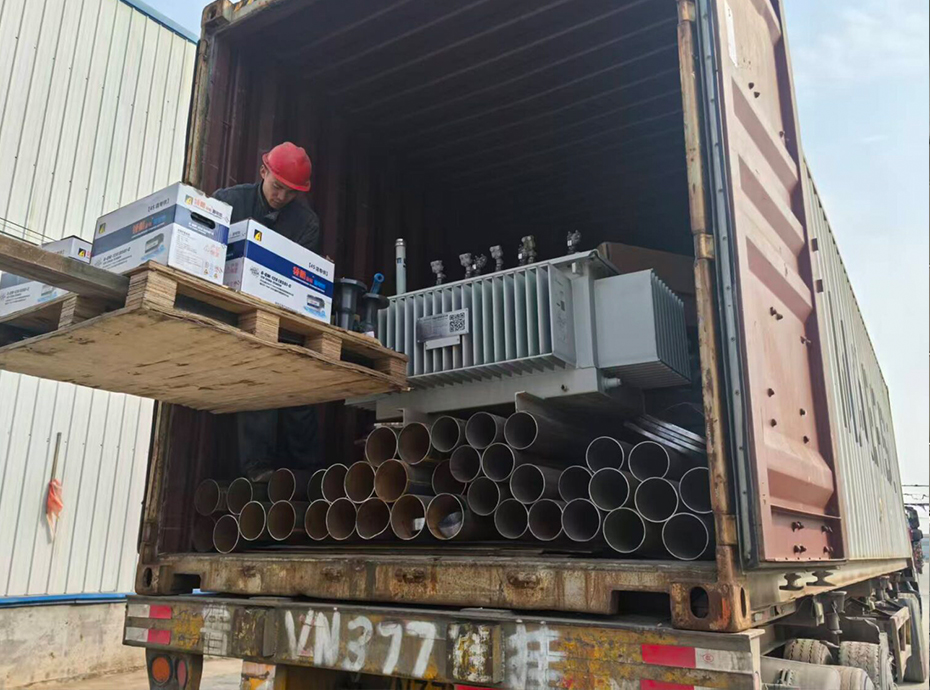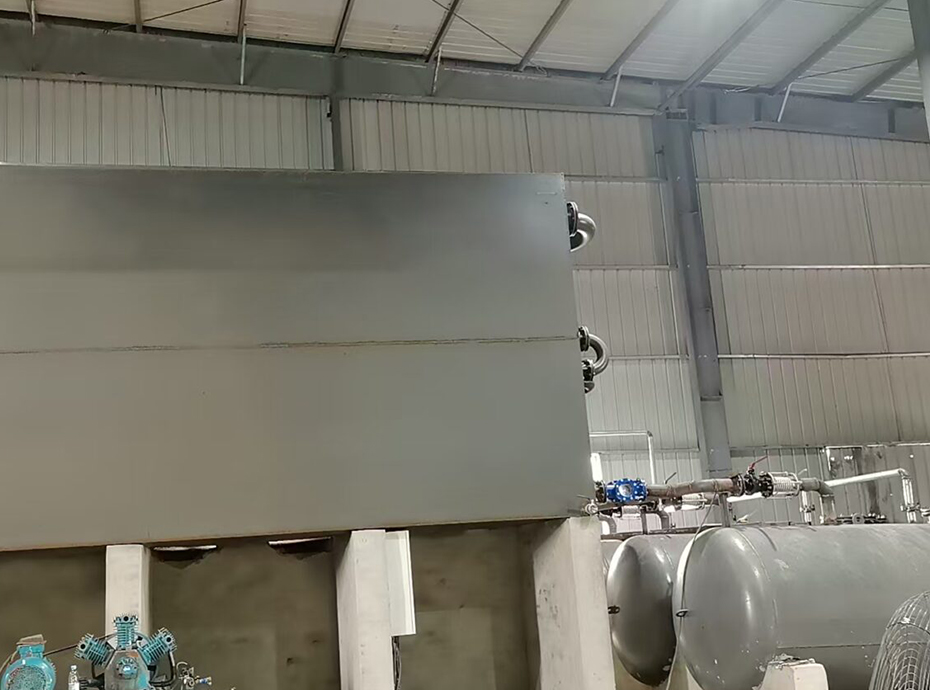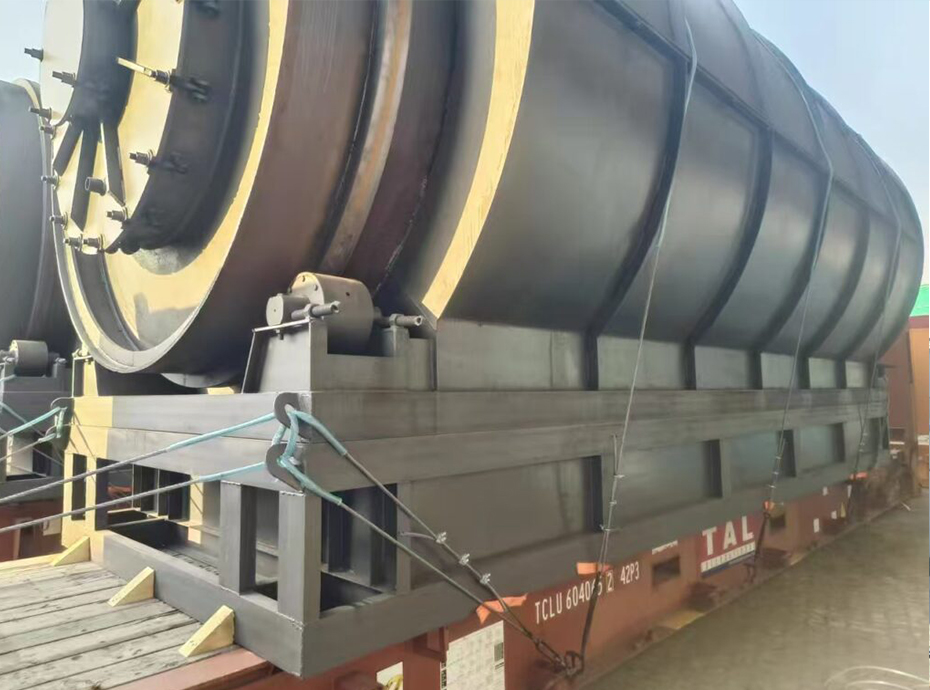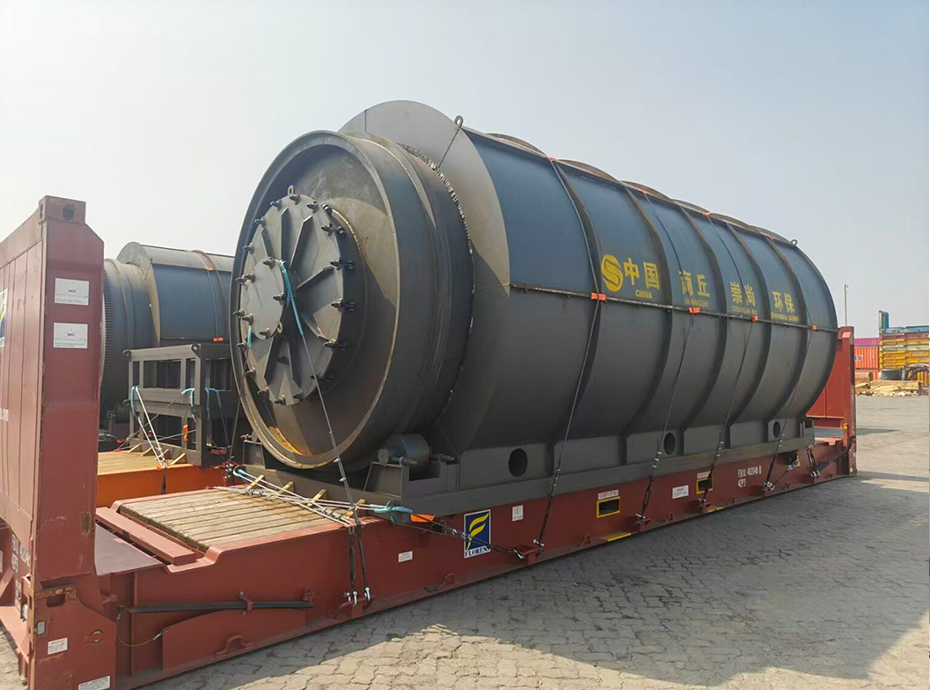

PyrolysisUnit adopts a water-film and double-alkali desulfurization dust removal system to purify acidic gases generated during oil sludge pyrolysis. The alkaline scrubbing liquid neutralizes acidic substances in the exhaust gas, helping reduce emissions and improve environmental compliance.
Oil Sludge Pyrolysis Plant
With a daily processing capacity of 1 to 20 tons, the Oil Sludge Pyrolysis Plant is specifically designed for scenarios including oilfield sludge treatment, refineries, oilfields, and industrial waste treatment projects. Its core function is to convert hazardous oil sludge into fuel oil, achieving an oil recovery rate of 30–50% while fully complying with environmental regulations. The plant generates three high-value usable products:
- Pyrolysis oil (40-45%): Can be used as boiler fuel, refined into diesel, or sold directly;
- Carbon black (30-40%): Suitable for applications like rubber manufacturing, bricks, paints, and inks;
- Syngas (8-10%): Recycled as clean energy to power the plant’s heating system.
How to Start Oil Sludge Pyrolysis?
Oil sludge pyrolysis is becoming an increasingly popular solution for converting hazardous oily waste into valuable fuel oil while reducing environmental pollution. However, before starting an oil sludge pyrolysis project, it is important to understand the feedstock characteristics, equipment requirements, and operational challenges.
1. What Types of Oil Sludge Are Suitable for Pyrolysis?
Most oily sludge materials can be processed through pyrolysis, including:
- Tank bottom sludge
- Refinery oily sludge
- Drilling waste oil sludge
- Industrial oily sediment
- Waste mineral oil sludge
- Marine oily sludge
The ideal oil sludge should contain:
- Recoverable hydrocarbon content
- Moderate moisture content
- Limited oversized metal impurities
If the water content exceeds 30%, starting the project is generally not recommended because excessive moisture significantly increases fuel consumption and reduces oil yield.
Before pyrolysis, the following should be tested:
- Moisture content
- Oil content
- Sulfur and chlorine content
- Metal impurities
- Presence of woven bags, plastics, or debris
If the sludge contains excessive woven bags or fibrous impurities, a screw feeding system is recommended. Large metal objects should be manually removed before feeding, while small metal particles usually do not require manual sorting.
2. How to Handle Coking During Oil Sludge Pyrolysis?
One of the biggest operational challenges in oil sludge pyrolysis is reactor coking.
PyrolysisUnit solves this problem by adding approximately 20 kg of waste tires into the reactor before processing the oil sludge. During the pyrolysis process, the steel wires inside the tires help scrape and reduce coke buildup on the inner reactor surface.
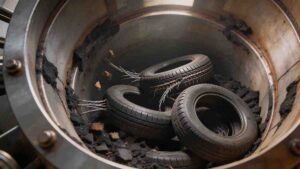
This method helps:
- Reduce reactor coking
- Improve heat transfer efficiency
- Extend continuous operation time
- Lower reactor cleaning frequency
This is especially useful for heavy oily sludge with high asphalt or heavy hydrocarbon content.
3. How to Handle Chlorine-Containing Gas During Pyrolysis?
Some oil sludge contains chlorine compounds, which may generate acidic gases during pyrolysis.
PyrolysisUnit uses a combined desulfurization and dust removal system featuring:
- Water-film scrubber technology
- Double-alkali desulfurization process
- Acid-base neutralization
- Magnetic ring adsorption system
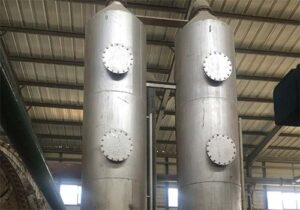
Acidic gases are neutralized through contact with alkaline scrubbing liquid inside the spray tower, helping reduce harmful emissions.
For high-chlorine oil sludge projects, PyrolysisUnit can upgrade:
- Reactor material
- Oil-contact pipelines
- Valves and fittings
to 301 stainless steel to improve corrosion resistance.
With these upgrades, the equipment service life can reach approximately 8–10 years.
4. Why Batch-Type Pyrolysis Machines Are Recommended
PyrolysisUnit recommends using batch-type pyrolysis systems for oil sludge treatment because oily sludge feedstock often has:
- Unstable composition
- High impurity content
- Variable moisture levels
- Complex viscosity characteristics
Batch pyrolysis systems provide:
- Better operational flexibility
- Easier maintenance
- Improved adaptability to difficult feedstock
- Lower risk of pipeline blockage
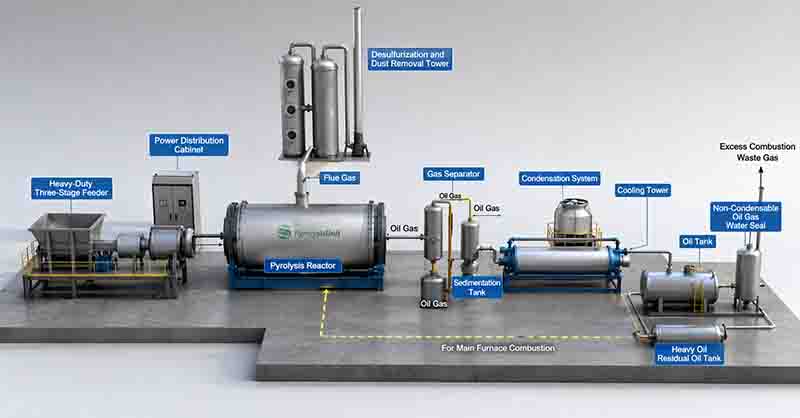
This makes batch pyrolysis equipment more suitable for oily sludge projects than continuous systems in many practical applications.
5. Economic Potential of Oil Sludge Pyrolysis
In many regions such as Europe and North America, oil sludge is classified as hazardous waste.
As a result, disposal subsidies or treatment fees are commonly available, typically ranging from:
- $250–$400 per ton
This means oil sludge pyrolysis projects may generate revenue from:
- Hazardous waste treatment fees
- Pyrolysis oil recovery
- Scrap metal recovery
- Carbon residue utilization
When combined properly, these factors can significantly improve project profitability.
6. Final Recommendation Before Starting
Before investing in an oil sludge pyrolysis project, it is strongly recommended to:
- Conduct laboratory testing
- Analyze moisture and impurity levels
- Confirm chlorine and sulfur content
- Evaluate local environmental regulations
- Determine whether pretreatment is required
Choosing the correct reactor material and gas treatment system is critical for ensuring long-term stable operation and equipment lifespan.
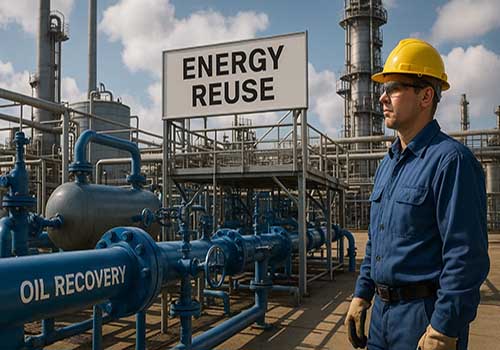
Oil Sludge Pyrolysis Plant Features
Approximately 20 kg of waste tires can be added into the reactor before processing oil sludge. During pyrolysis, the steel wires inside the tires help scrape coke buildup from the reactor wall, reducing coking problems and improving heat transfer efficiency.
Even if the oil sludge contains woven bags, fibrous materials, or small metal particles, the system can still use a screw feeding system for stable feeding. Small metal impurities usually do not require manual removal, improving operational flexibility and reducing pretreatment costs.
What Is Oil Sludge Pyrolysis and How Does It Work?
Definition of Oil Sludge Pyrolysis: Oil sludge pyrolysis is an advanced thermal treatment technology that decomposes hazardous oil sludge into valuable renewable resources (pyrolysis oil, carbon black, syngas) under oxygen-free or hypoxic high-temperature conditions (300–800℃). It transforms toxic, non-degradable oil sludge into usable products while minimizing environmental impact—core to sustainable waste management for oil-related industries.
Why It’s More Rational Than Landfill/Incineration
- vs. Landfill: Landfill occupies massive land resources and risks leaching toxic substances into groundwater/soil, causing long-term environmental pollution. Pyrolysis completely eliminates hazardous components in oil sludge and recycles resources, avoiding secondary pollution and land waste.
- vs. Incineration: Incineration releases harmful gases (e.g., dioxins, SO₂) and requires high energy input. Pyrolysis operates in an oxygen-free environment, producing no dioxins or other toxic emissions. Moreover, the syngas generated during pyrolysis can be recycled as fuel, reducing energy consumption and realizing resource reuse.
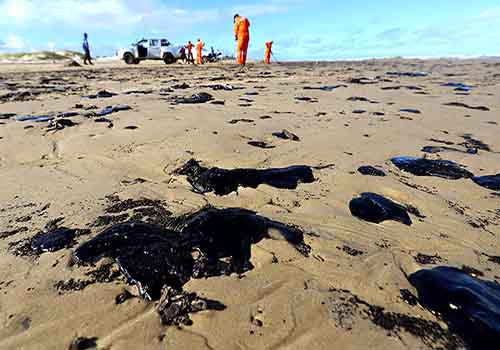
Core Principle: Oxygen-Free Thermal Decomposition: Under sealed, oxygen-free conditions, oil sludge is heated to a specific temperature to break down long-chain organic compounds into small-molecule gases (syngas) and liquid hydrocarbons (pyrolysis oil). The remaining solid residue is carbon black. This process not only neutralizes the hazardous nature of oil sludge but also maximizes resource recovery—our technology optimizes temperature control (450–650℃) and reaction time to improve product yield and quality.
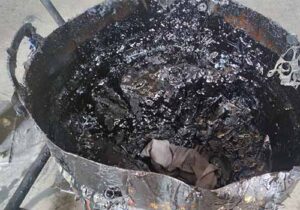
What Types of Oil Sludge Can Be Treated?
Our pyrolysis equipment is capable of processing the following oil sludges:
- Refinery Tank Bottom Sludge: Generated from crude oil storage tanks in refineries, with high oil content (20–50%) and complex components (mixed with wax, asphalt, and chemical additives).
- Oilfield Drilling Sludge: Produced during oilfield exploration and drilling, containing drilling fluids, clay, and crude oil—high in solid impurities and mineral content.
- Oily Soil & Contaminated Sludge: Soil contaminated by oil spills or leakage, with uneven oil distribution and high moisture content (often 30–60%).
- Wastewater Treatment Sludge: Residue from oil-containing wastewater treatment processes in refineries/chemical plants, with fine particles and high organic pollutant content.
Refinery Tank Bottom Sludge
Oil yield rate: 15–40%
Sulfur content: 1.0–8.0%
Carbon black yield: 25–40%
Syngas yield: 10–18%
Oilfield Drilling Sludge
Oil yield rate: 8–25%
Sulfur content: 0.5–5.0%
Carbon black yield: 35–50%
Syngas yield: 6–12%
Oily Soil & Contaminated Sludge
Oil yield rate: 10–35%
Sulfur content: 0.1–2.0%
Carbon black yield: 20–35%
Syngas yield: 8–15%
Wastewater Treatment Sludge
Oil yield rate: 5–15%
Sulfur content: 0.3–3.0%
Carbon black yield: 15–25%
Syngas yield: 12–20%


Oil Sludge Pyrolysis Process
Our oil sludge pyrolysis process is a closed-loop, eco-friendly system with 5 core steps, optimized for high efficiency, safety, and resource recovery:
- Pre-Treatment (Dewatering & Homogenization): First, raw oil sludge undergoes mechanical dewatering (pressure filtration/centrifugation) to reduce moisture content from 30–60% to ≤10%—critical for improving thermal efficiency and reducing fuel consumption. Then, the dewatered sludge is homogenized (crushed and mixed) to ensure uniform particle size and oil distribution, laying the foundation for stable pyrolysis.
- Sealed Pyrolysis Reactor: Homogenized sludge is fed into a sealed, oxygen-free reactor (our core equipment). The reactor is heated to 450–650℃ via recycled syngas or external fuel. Under oxygen-free conditions, sludge decomposes into pyrolysis gas (hydrocarbons + syngas) and solid residue (carbon black + impurities). Our reactor uses a jacketed heating design for uniform temperature distribution and wear-resistant 316L stainless steel to withstand high corrosion and temperature.
- Oil–Gas Condensation: The pyrolysis gas is cooled by a multi-stage condenser (water-cooled + air-cooled) to convert liquid hydrocarbons into pyrolysis oil. Non-condensable syngas (e.g., methane, propane) is separated for recycling. Our condenser system is optimized for high condensation efficiency (≥95%) to maximize pyrolysis oil yield.
- Syngas Recovery: The separated syngas is purified (removing dust and tar) and then recycled to the reactor’s heating system as fuel—reducing external fuel consumption by 30–40%. Excess syngas can also be stored as clean energy for other industrial uses, realizing energy self-sufficiency.
- Solid Residue Discharge: After pyrolysis, the solid residue (carbon black + impurities) is discharged from the reactor via a sealed system (to avoid oxygen ingress). The residue is then processed to separate carbon black (reusable as fuel or rubber additive) and inert impurities (harmless, can be used as building materials), achieving zero waste discharge.
Related Product: Sludge Pyrolysis Unit

Daily Processing Capacity 1–5 t Pyrolysis Machine
Capable of processing 1 to 5 tons of oil-bearing sludge within 24 hours via a pyrolysis process, it achieves an oil yield of 40% to 75%, thereby transforming waste into valuable resources through recycling.

Daily Processing Capacity 10–15 t Pyrolysis Machine
The batch-type pyrolysis plant can process 10 to 15 tons of oil sludge per day. This equipment is suitable for small and medium-sized recycling plants, customers with stable and centralized feedstock sources, and government environmental protection projects.
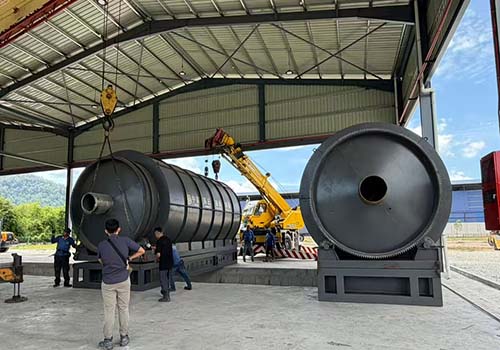
Daily Processing Capacity 10–30 t Pyrolysis Machine
The semi-continuous pyrolysis plant is suitable for waste tire and plastic pyrolysis, with a processing capacity of more than 20 tons per day. However, it is not suitable for oil sludge pyrolysis.
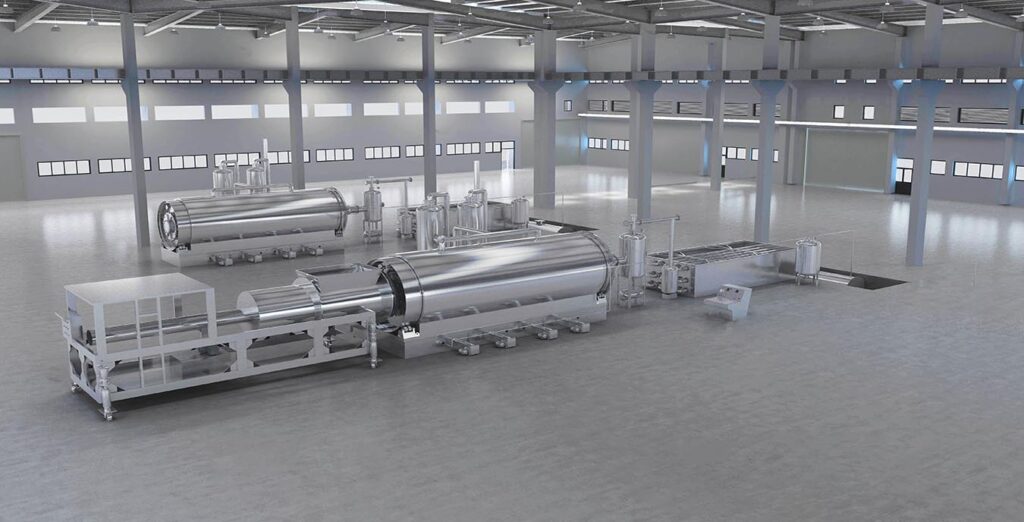
| System | Main Furnace System | PUHB-7 | Quantity | Specification Model | Characteristics | Remarks |
|---|---|---|---|---|---|---|
| Main Furnace | Pyrolysis Main Furnace | Unit | 1 | 2600*7700 | 16mm | Q345R |
| Circular Door | Set | 1 | 1500 | 16mm | Q345R | |
| Insulation Shell | Set | 2 | Matching main furnace | Assembly | ||
| Main Furnace Base | Set | 1 | Matching main furnace | Assembly | ||
| Furnace Door Bolts | Set | 19 | Matching main furnace | Precision Part | ||
| Furnace Chamber | Set | 1 | Matching main furnace | Assembly | ||
| Support Roller | Piece | 4 | Matching main furnace | Rod Bearing | Standard Part | |
| Transmission | Custom Gear Ring | Piece | 1 | Matching main furnace | Standard Part | |
| Variable Speed Motor | Unit | 1 | Matching system | 7.5kw | Standard Part | |
| Pulleys (Large/Small) | Set | 1 | Matching reducer | Standard Part | ||
| Reducer | Unit | 1 | 500 | 7.5KW | Cast Steel Housing | |
| Sealing System | Gas Outlet | Piece | 1 | 6425 | Standard Part | |
| Graphite Ring | Piece | 10 | φ425 | Standard Part | ||
| Sealing Body | Piece | 1 | φ425 | Assembly | ||
| Bellows Compensator | Piece | 1 | φ425 | 316 Stainless Steel | ||
| Asbestos Packing | Box | 1 | φ425 | Standard Part | ||
| Separation System | Gas Bag | Unit | 1 | φ900x1800 | 6mm | Standard Part |
| Residue Oil Tank | Unit | 1 | Matching gas bag | Assembly | ||
| Condensation System | Tubular Condenser (with Water Tank) | Set | 1 | Matching main furnace | Assembly | |
| Settling Tank | Unit | 1 | φ600x1000 | Standard Part | ||
| Oil Collection Tank | Unit | 1 | 5T | Standard Part | ||
| Oil Pump | Unit | 1 | Matching system | 2.2KW | Explosion-proof | |
| Slag Discharge | Central Slag Discharge Door | Unit | 1 | φ530 | Sealed Discharge | Assembly |
| Slag Discharger | Set | 1 | φ530 | Sealed Discharge | Assembly | |
| Non-Condensable Gas Recycling | Water Seal Tank | Unit | 1 | φ900x1500 | Standard Part | |
| Flame Arrester | Piece | 1 | DN50 | Standard Part | ||
| Waste Gas Burner | Set | 4 | Matching combustion chamber | Standard Part | ||
| Burner Brick | Piece | 8 | Matching burner | Standard Part | ||
| Hose | Set | 4 | Matching burner | Standard Part | ||
| Desulfurization & Dust Removal | Desulfurization Tower | Set | 1 | Matching system | Assembly | |
| Dust Removal Water Pump | Unit | 1 | Matching system | 3.0KW | Stainless Steel Impeller | |
| Induced Draft Fan (with Motor) | Unit | 1 | Y5-47-5C | 5.5KW | Assembly | |
| Fan Damper | Piece | 1 | Matching fan | Standard Part | ||
| Safety System | Explosion-proof System | Set | 1 | Matching system | Standard Part | |
| Instrumentation | System Instruments | Group | 1 | Matching system | Assembly | |
| Control Cabinet | Electrical Control Cabinet | Set | 1 | Matching system | With Speed Controller | Assembly |
| Piping | Pipes & Fittings | Group | 1 | Matching system | Assembly | |
| 3-Stage Heavy Duty Feeder | Pressure Cylinder | Set | 1 | Assembly | ||
| Pusher | Set | 1 | Assembly | |||
| Motor | Piece | 1 | Assembly | |||
| Feeder Frame | Piece | 1 | Assembly | |||
| Feeder Roller | Piece | 1 | Assembly | |||
| Feeder Casters | Piece | 4 | Assembly | |||
| Feeder Adjuster | Piece | 4 | Assembly |
Why Choose a Pyrolysis Machine from PyrolysisUnit?
After
Sales Service
Sales Service
We provide 24/7 online customer support, as well as video-based after-sales technical assistance from our engineers.
quality
1. The steel plate thickness of the main furnace is 18 mm.
2. The interior of the main furnace is fabricated using a spiral double-sided lap-welding process.
3. The external insulation support framework of the main furnace is constructed from 12 mm thick refractory castable and aluminum silicate cotton blocks.
4. All bolts used are Grade 8.8 high-strength bolts.
- 18-Month Warranty
- Pyrolysis Feas. Report
- 24/7 customer service
- ROI Calculation
- EX Certification
- 23Y Equipment R&D
Equipment work Video
Our Oil Sludge Pyrolysis Plant is designed for companies and government-backed projects with a stable supply of oil sludge and other waste materials. With a daily processing capacity of 5–10 tons, this plant provides an efficient and cost-effective solution for converting oil sludge into valuable fuel oil, carbon black, and combustible gas. Built for larger-scale industrial and municipal operations, it ensures reliable performance, simple operation, and easy maintenance. Trusted by clients worldwide and supported by professional after-sales service, our plant can be customized to meet your long-term waste management and resource recovery needs.
PyrolysisUnit Global Case Studies
Distillation Equipment Project in Malaysia In February 2026, a waste-tire recycling client based in Johor,
Waste Plastic-to-Fuel Refining Equipment Two Sets of Waste Plastic-to-Fuel Refining Equipment Delivered to Malaysia in
10-Ton-Per-Day Waste Oil Distillation Facility April 2026: 10-Ton-Per-Day Waste Oil Distillation Facility in Phnom Penh,
Four Sets Of Waste Tire-To-Oil Pyrolysis Equipment Delivery Of Four Sets Of Waste Tire-To-Oil Pyrolysis
Two Waste Plastic-To-Fuel Pyrolysis Units A Project Involving Two Waste Plastic-To-Fuel Pyrolysis Units Delivered To
Waste Tire-to-Fuel Pyrolysis Plant Installation Detailing The Installation Of One Waste Tire-To-Fuel Pyrolysis Plant In
Skid-Mounted Waste Oil Distillation Unit Delivery In March 2025, a prominent mining services company based
Aluminum-Plastic Pyrolysis Plants In Vietnam Two Aluminum-Plastic Pyrolysis Plants In Vietnam, Completed In October 2024
Oil Sludge Pyrolysis Plant Guide - Compliance, Safety & Selection
Table of Contents
Part 1: Environmental Compliance & Emission Control
Why Oil Sludge Pyrolysis ≠ Plastic/Tyre Pyrolysis: Oil sludge is fundamentally different from plastic/tyre waste—it is a hazardous waste containing toxic substances (e.g., polycyclic aromatic hydrocarbons, heavy metals) and corrosive components (e.g., naphthenic acid). Its treatment is subject to stricter global environmental regulations (e.g., EU Waste Framework Directive, US RCRA). Unlike plastic/tyre pyrolysis which focuses on resource recycling, oil sludge pyrolysis must first meet “hazardous waste harmless treatment” standards, with higher requirements for emission control and residue disposal. Our equipment is specifically engineered for these characteristics, avoiding secondary pollution risks that generic plastic/tyre pyrolysis equipment may bring.
Three-Waste Treatment Logic (Closed-Loop Environmental Protection System)
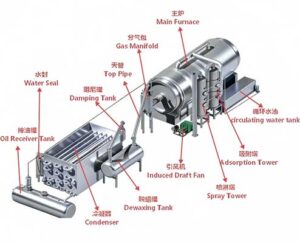
- Waste Gas Treatment: Adopt multi-stage purification process—pyrolysis gas first passes through a cyclone dust collector to remove solid particles, then enters an activated carbon adsorption tower to filter VOCs and odorous substances, and finally is discharged at high altitude after passing through a catalytic combustion module (optional for strict regions). Emissions fully meet global standards (e.g., EU: particulate matter ≤10mg/m³, VOCs ≤20mg/m³; US EPA: HAPs ≤0.005g/s).
- Waste Water Treatment: Implement zero-discharge closed-loop system—dehydration wastewater from oil sludge pre-treatment is separated by oil-water separator (oil recovery rate ≥95%), then treated by coagulation sedimentation and ultrafiltration, and fully reused for equipment cooling. No wastewater is discharged externally, avoiding groundwater/soil contamination.
- Solid Residue Treatment: The solid residue after pyrolysis (carbon black + inert impurities) is detoxified. After purification, carbon black can be reused in rubber manufacturing or as fuel; inert impurities (harmless after treatment) can be used as building materials or disposed of in general waste landfills, complying with hazardous waste reduction and recycling requirements.
Comparison with Earth Furnace: Earth furnace (informal open pyrolysis equipment) is widely used in some low-regulation regions for waste treatment, but it has inherent environmental flaws. Compared with earth furnace, our oil sludge pyrolysis plant has obvious compliance advantages: 1. Closed-loop operation: No toxic gas leakage or dust scattering, avoiding atmospheric pollution; 2. Standardized emission control: Equipped with professional three-waste treatment modules, emissions meet local regulatory requirements; 3. Hazardous waste harmlessness: Effectively decompose toxic components in oil sludge, while earth furnace only performs simple pyrolysis, leaving toxic residues. Choosing our equipment ensures legal operation and avoids risks of fines or shutdowns due to non-compliance.
Part 2: Safety Design & Risk Control
Oil sludge pyrolysis involves high temperature, high pressure and hazardous components, so safety is the core of our equipment design. We adopt a multi-level safety protection system, verified by 1000+ global projects, to ensure safe operation throughout the process.
- Oxygen-Free System (Core Safety Guarantee): The entire pyrolysis process is carried out in a fully sealed oxygen-free environment. The system is equipped with a professional airtight feeding/discharging device and a continuous oxygen concentration monitoring sensor (detection limit ≤1% O₂). If oxygen leakage is detected, the system will automatically cut off heating and trigger an alarm. This design fundamentally avoids the risk of deflagration caused by mixing of pyrolysis gas and oxygen, which is a common safety hazard in semi-open equipment.
- Over-Temperature & Over-Pressure Protection: Equipped with dual-channel temperature and pressure monitoring (precision ±0.5℃/±0.001MPa) for the pyrolysis reactor. When the temperature exceeds 700℃ (safe threshold) or the pressure exceeds 0.06MPa, the system will take three interlocking measures simultaneously: 1. Cut off the heating source and stop feeding; 2. Activate the automatic pressure relief valve (safety valve + rupture disc dual protection) to release pressure rapidly; 3. Trigger audible and visual alarms to remind operators. The pressure relief pipeline is connected to the waste gas treatment system to avoid secondary pollution during pressure relief.
- Water Seal & Emergency Venting: The pyrolysis gas pipeline is equipped with a high-performance water seal device, which forms a liquid barrier to prevent backfire and ensure that the flame cannot spread to the reactor. In addition, the system is equipped with an emergency venting port with a quick-opening valve—for extreme abnormal conditions (e.g., sudden pressure surge), operators can manually open the emergency venting port to release pressure in the shortest time, maximizing equipment and personnel safety.
Part 3: Core Equipment Technology Advantages
As a professional manufacturer with independent intellectual property rights, our oil sludge pyrolysis equipment integrates multiple innovative technologies, effectively solving industry pain points such as poor airtightness, uneven heating, low yield, and easy corrosion. The core technical advantages are as follows:
- High-Tightness Sealing System: The connection between the furnace body and equipment adopts lathe coil mold technology for connection, ensuring excellent airtightness. Equipped with graphite seals, directional transmissions, and national standard stainless steel corrugated expansion joints, the dynamic sealing material can effectively prevent gas leakage, ensure production safety, and has independent intellectual property rights.
- Horizontal Dual-Drive Rotating Structure: The key part of the pyrolysis processor is designed with a horizontal dual-drive rotating structure with a rotation speed of 0.4 rpm. It completely overcomes the industry problems of domestic vertical flat-bottom pyrolysis processors, such as uneven heating at the bottom, easy fracture, low output, and short service life.
- Corrosive Gas Treatment: A small amount of acid gas will be generated during equipment operation. Our system effectively treats corrosive gases such as hydrogen sulfide in materials through special processes. On the one hand, it reduces the damage of corrosive gases to equipment; on the other hand, it reduces secondary environmental pollution.
- Impurity Removal at Processor Outlet: A special facility with independent intellectual property rights is added near the outlet of the pyrolysis processor. The improvement of this process can change the direction of the air flow, effectively remove impurities entrained in the gas discharged from the pyrolysis device, and reduce the possibility of smoke accumulation and blockage.
- Gas Drying & Anti-Corrosion: A special device is installed in the multi-stage separator device, which can dry the gas, further reducing the possibility of equipment corrosion and blockage.
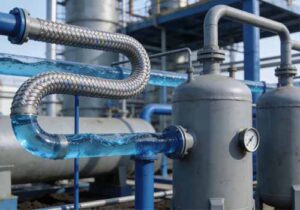
- Anti-Clogging Pipeline with Pre-Cooling Function: The entire process of gas from the gas distribution package to the condenser adopts anti-clogging four-way process pipelines. In addition, a condensation sleeve is added outside the pipeline, which can achieve a pre-cooling effect on the gas.
- Innovative Baffle Condenser: We have broken through the original condensation process on the condenser and innovated a baffle condenser, which can extend the cooling time of the gas, thereby greatly improving the oil yield.
- U-Shaped Liquid Flow Pipeline: We have changed the original straight pipeline to an innovative U-shaped pipeline in the liquid flow pipeline. This pipeline can prevent insufficiently condensed gas from flowing out with the liquid and being wasted, and return it to the condenser for re-cooling.
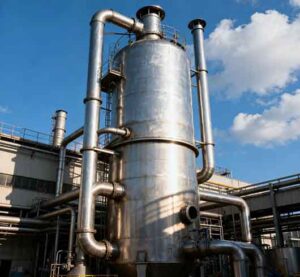
- Double-Layer Packing Atomization Tower: Regarding the environmental protection issue of flue gas emission, we have changed the original old-fashioned atomization tower. The currently used atomization tower is designed with double-layer packing, which effectively improves the flue gas treatment effect.
Part 4: Which Oil Sludge Pyrolysis Plant Is Right for Your Project?
As a professional manufacturer, we provide customized solutions based on 4 core judgment points to ensure the plant matches your project needs and maximizes return on investment:
- Daily Sludge Volume (t/day): Determine the plant’s processing capacity. For small-scale projects (5–15 t/day), batch-type plants are cost-effective; for medium-scale operations (15–30 t/day), semi-continuous plants balance efficiency and cost; for large-scale industrial recycling (30 t/day+), continuous plants support 24/7 operation and high-volume treatment.
- Oil Content (%): Affects process configuration and product yield. For high-oil-content sludge (≥20%, e.g., refinery tank bottom sludge), we optimize the condensation system to improve oil recovery; for low-oil-content sludge (≤15%, e.g., wastewater treatment sludge), we enhance the pre-treatment module and syngas recovery system to ensure economic benefits.
- Water Content (%): Determines the pre-dewatering equipment type. For sludge with high water content (≥30%, e.g., oily soil), we configure high-pressure filter presses or centrifuges to reduce moisture to ≤10% before pyrolysis, improving energy efficiency; for low-water-content sludge, we simplify the dewatering process to reduce investment.
- Local Environmental Requirements: Customize the emission control module. For regions with strict standards (e.g., EU, US), we add catalytic combustion and heavy metal removal modules; for emerging markets with basic requirements, we configure a cost-effective three-waste treatment system that meets local regulatory thresholds. We provide professional policy interpretation to ensure compliance.
Part 5: Why Oil Sludge Pyrolysis Is Not Just “Another Pyrolysis Plant”
Oil sludge pyrolysis requires higher safety and compliance standards than general waste pyrolysis. The following comparison clearly shows its advantages over traditional treatment methods:
Item | Earth Furnace | Incineration | Our Oil Sludge Pyrolysis |
Legal compliance | ❌ Non-compliant with hazardous waste treatment regulations; high risk of shutdown/fines | ⚠️ Compliant only with strict emission control; subject to complex approval procedures | ✅ Meets global hazardous waste treatment standards; one-stop compliance support |
Energy recovery | ❌ Open operation; low energy utilization rate; massive waste of recyclable oil/gas | ❌ Only generates heat; no resource recycling; high energy consumption | ✅ Recovers pyrolysis oil, carbon black and syngas; syngas reused for heating, reducing energy input by 30–40% |
Operating cost | ❌ Hidden high cost (fines, environmental remediation, equipment replacement due to frequent failures) | ⚠️ High cost (fuel, emission treatment, labor) | ✅ Lower comprehensive cost (energy self-sufficiency, low maintenance, standardized operation) |
Long-term viability | ❌ Gradually banned globally due to environmental pollution; unsustainable | ⚠️ Facing stricter emission standards; high transformation cost in the future | ✅ Modular design supports technical upgrading; adaptable to future regulatory changes; sustainable operation |
Part 6: Frequently Asked Questions About Tyre Oil Sludge Pyrolysis Plant
How to dispose of heating oil sludge?
Professional Tank Cleaning & Disposal
- Hire a licensed hazardous waste contractor to pump out and clean the tank.
- The sludge is then transported to approved treatment or disposal facilities.
Recycling via Pyrolysis or Thermal Treatment
- Advanced methods like oil sludge pyrolysis can recover fuel oil (30–50% yield) and syngas, turning sludge into usable energy while minimizing pollution.
- This is increasingly favored for refineries, oilfields, and industrial waste management.
Stabilization and Landfilling
- Sludge can be mixed with absorbents or solidifying agents, then disposed of in regulated hazardous waste landfills.
- This method is less sustainable, as it does not recover energy.
Incineration
- High-temperature incineration destroys hydrocarbons and reduces sludge volume.
- Requires strict emission controls to prevent air pollution.
Wastewater Treatment (for small quantities)
- Some oily sludge can be pretreated (dewatered, emulsified) and processed at specialized wastewater treatment plants.
Is pyrolysis oil environmentally friendly?
1. The Positive Side
Waste Reduction: Pyrolysis oil comes from processing plastic waste, used tires, oil sludge, and biomass — all of which would otherwise end up in landfills, incinerators, or polluting oceans.
Energy Recovery: Instead of being “waste,” pyrolysis oil re-enters the energy cycle as an alternative fuel, reducing demand for virgin fossil fuels.
Lower Emissions than Incineration: When produced in a well-controlled pyrolysis plant, emissions are much lower compared to direct burning or open dumping.
Carbon Circularity: It contributes to a circular economy by turning waste into valuable products like fuel oil, syngas, and carbon black.
2. The Concerns
Quality Variability: Pyrolysis oil often has impurities (sulfur, oxygenates, water) and requires further distillation or upgrading before it can replace diesel or gasoline.
Emissions During Use: If burned directly, it still releases CO₂ and other pollutants (though comparable to conventional fuels).
Process Energy Use: Pyrolysis requires heat — if powered by fossil fuels, the process carbon footprint increases. Plants with syngas recycling are far cleaner.
Regulatory Acceptance: In some countries, pyrolysis oil is not yet classified as a “green fuel,” limiting its use in transportation.
3. Overall Verdict
Pyrolysis oil is more environmentally friendly than landfill or incineration because it recovers energy from waste and reduces long-term pollution. However, it is not a zero-carbon fuel — the best environmental performance comes from:
Using continuous pyrolysis plants with emission controls.
Upgrading oil through distillation to improve fuel quality.
Integrating renewable energy for heating instead of fossil fuels.
What is the process of sludge pyrolysis?
1. Pre-Treatment
Dewatering & Drying: Since oil sludge often contains 30–50% water, moisture is removed to improve efficiency.
Homogenization: Sludge is stirred or blended to ensure a consistent feedstock.
2. Feeding into Reactor
The pre-treated sludge is transported through a sealed feeding system into the pyrolysis reactor.
Prevents oxygen entry (critical to avoid combustion).
3. Thermal Decomposition (Pyrolysis Stage)
Reactor is heated to 350–450°C (depending on sludge composition).
Hydrocarbons in sludge break down into smaller molecules.
Products formed:
Fuel Oil Vapors
Syngas (non-condensable gases)
Solid Residues (ash, carbon, metal particles, sand)
4. Condensation & Oil Recovery
Oil vapors pass through a multi-stage condensation system.
Converted into liquid pyrolysis oil (yield ~30–50%).
High recovery rate depends on efficient condensation.
5. Syngas Recycling
Non-condensable gases are cleaned and reused as heating fuel for the reactor.
Reduces external energy demand and lowers operational cost.
6. Solid Residue Discharge
Inert solids like carbon black, sand, and metal particles are collected.
Possible uses: construction filler, road base material, activated carbon production.
7. Emission Control
Flue gases pass through desulfurization, dust removal, and cooling systems.
Ensures compliance with environmental standards.
What are the main end products?
Fuel oil (30–50% yield): Can be used for industrial heating, generators, or refined further.
Syngas: Recycled to heat the reactor, lowering fuel costs.
Solid residues: Used in construction, road base, or activated carbon production.
How much sludge can it process per day?
Capacity depends on plant type:
Batch type: 1–10 tons/day.
Semi-continuous: 10–20 tons/day.
Fully continuous: 20–30+ tons/day, suitable for industrial-scale operations.
What are the advantages compared to landfill or incineration?
Eliminates long-term soil and groundwater pollution risks.
Reduces greenhouse gas emissions.
Generates energy products (fuel oil & syngas), creating economic value.
Meets stricter environmental regulations.
What industries can benefit from it?
Oil refineries (tank bottoms, storage waste).
Oilfields (drilling mud, oily soil).
Shipyards (sludge from marine engines).
Municipal wastewater plants (oily residues).
Is pyrolysis of oil sludge environmentally friendly?
Yes. With multi-stage condensation, emission control systems, and syngas recycling, pyrolysis minimizes emissions and avoids the toxic leachate problems of landfills.