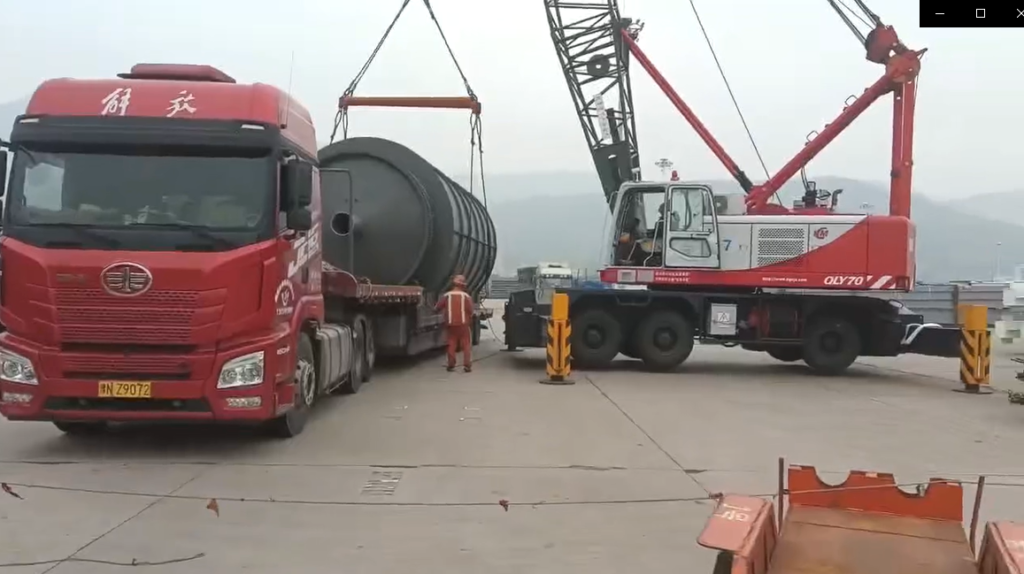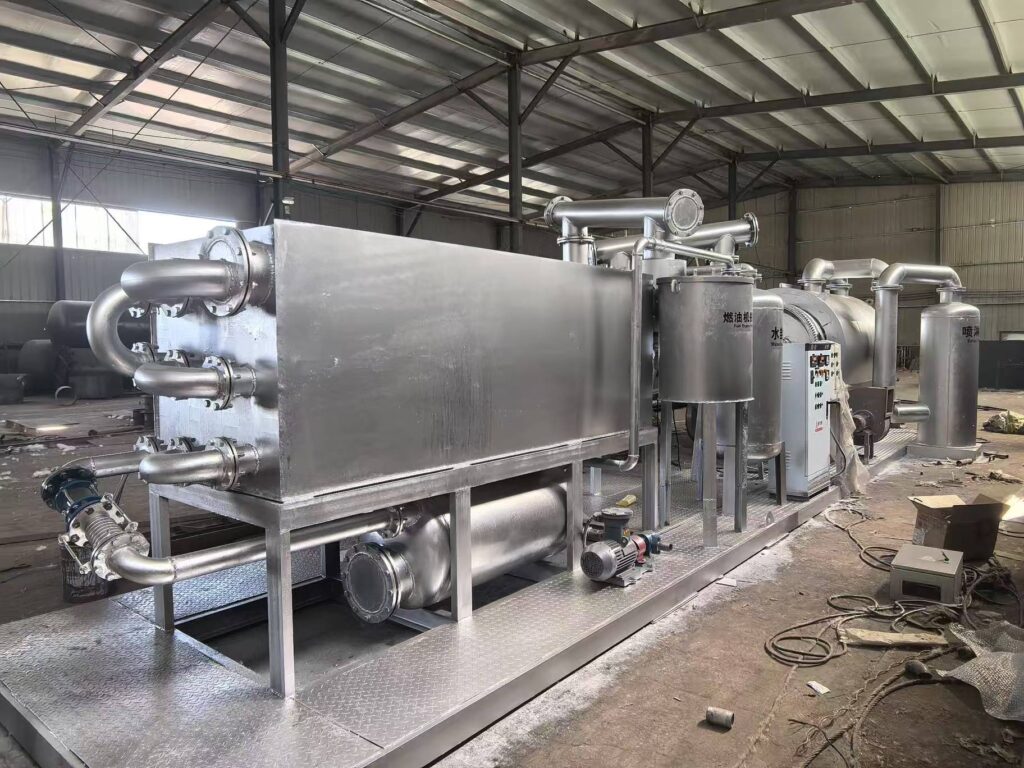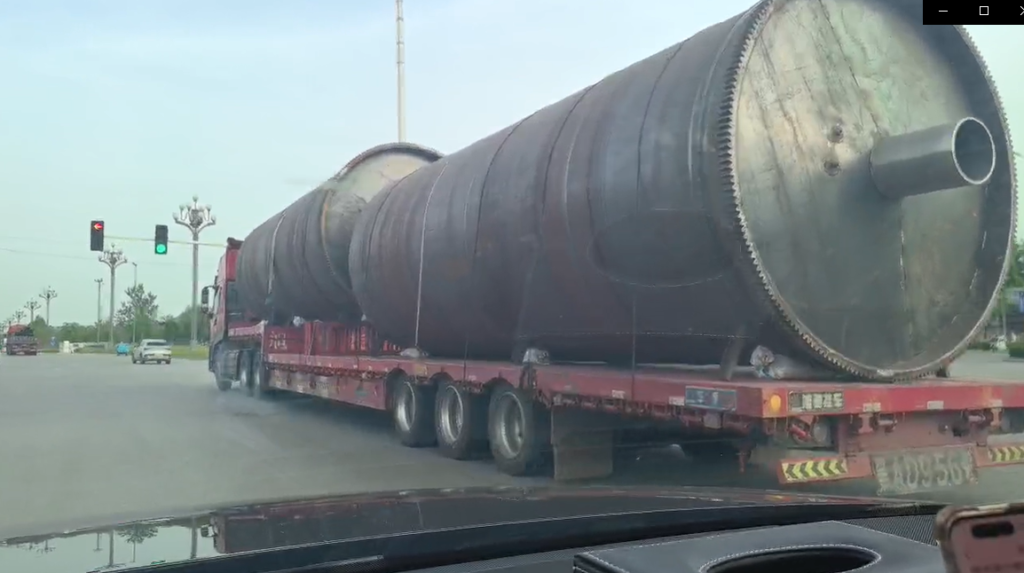

Continuous Tyre Pyrolysis Plant
PyrolysisUnit’s continuous tyre pyrolysis plant converts 30–100 tons of waste tires per day into pyrolysis oil (40–45% yield), carbon black (30–35%), and steel wire (10–15%) through fully automated 24/7 operation. Oil yield fluctuation is controlled within ±2%, ensuring consistent output quality for long-term downstream supply contracts.
The reactor is constructed with 316L stainless steel inner walls and operates at 450–650℃ under slight negative pressure, with a continuous run cycle of 3–6 months before scheduled maintenance. The integrated syngas recycling system covers 30–40% of heating demand, reducing external fuel costs and lowering overall operating expenses by 25–35% compared to batch systems of equivalent scale.
ISO 9001:2015 & CE certified. Available in 30T, 50T, and 100T/day configurations. Free raw material testing and project feasibility analysis provided before purchase.
What Is a Continuous Tyre Pyrolysis Plant?
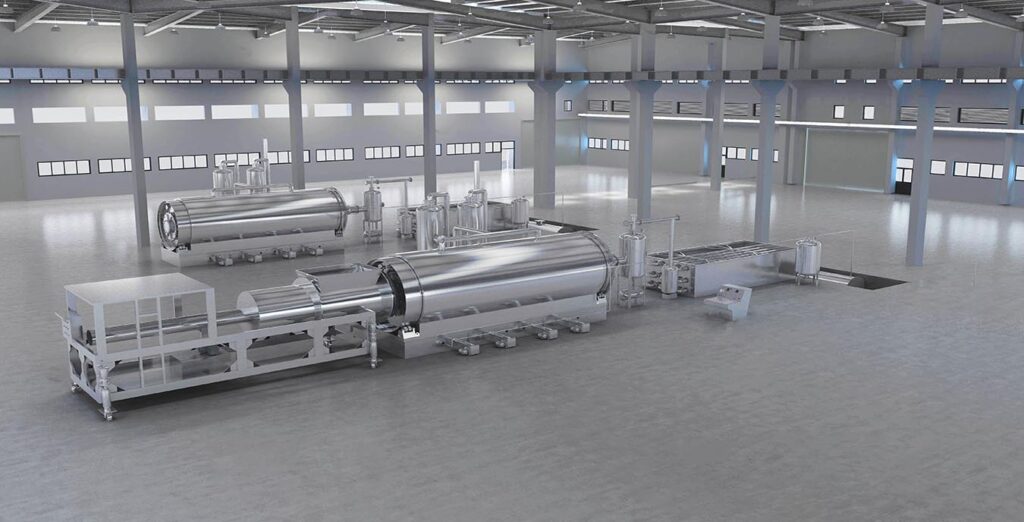
A continuous tyre pyrolysis plant is a professional thermal decomposition equipment designed for large-scale, uninterrupted recycling of waste tyres. It realizes continuous feeding of tyre raw materials, continuous pyrolysis reaction, continuous discharge of products (pyrolysis oil, carbon black, syngas) and 24-hour non-stop operation through a fully automated, sealed system, converting waste tyres into high-value renewable resources efficiently and stably.
The essential difference between continuous and batch tyre pyrolysis plants lies in the continuity of the entire production process: batch plants require intermittent feeding, shutdown reaction, and manual discharge, while continuous plants achieve seamless connection of all links through automated control, fundamentally solving the problems of low efficiency and unstable output of batch equipment.
Raw Material Requirements for Continuous Tyre Pyrolysis
Clear raw material requirements are the premise for the stable operation of continuous tyre pyrolysis plants. Unlike batch plants that have relatively loose requirements, continuous systems have strict specifications for tyre raw materials—this is a core technical point that distinguishes professional manufacturers from inferior equipment suppliers.
Can whole tyres be used in a continuous system?
No, whole tyres cannot be used in a continuous tyre pyrolysis system. The continuous operation of the plant relies on the uniform, stable feeding of raw materials and the smooth progress of the pyrolysis reaction. Whole tyres have irregular shapes, large volumes, and uneven thicknesses, which will cause serious blockages in the continuous feeding system, destroy the sealed environment of the reactor, and even lead to equipment failure due to uneven heating. In addition, the steel wires and fiber layers in whole tyres cannot be separated in advance, which will affect the quality of pyrolysis products and increase the wear of equipment.
Recommended tyre size or powder specification
We recommend that waste tyres be processed into rubber powder or fine chips that meet the following specifications before entering the continuous pyrolysis plant: 1. Particle size: 3–10 mm (rubber powder) or 5–20 mm (fine chips); 2. Impurity requirements: steel wire removal rate ≥99%, fiber removal rate ≥98%, moisture content ≤5%; 3. Uniformity: the particle size deviation of raw materials should not exceed ±2 mm to ensure stable feeding and uniform pyrolysis.
Why size consistency matters for continuous feeding
Size consistency of raw materials is the key to ensuring the stable operation of the continuous feeding system and pyrolysis reaction: 1. Ensuring smooth feeding: Uniform particle size raw materials can pass through the screw feeder stably, avoiding blockages caused by large particles or gaps caused by small particles; 2. Maintaining sealed environment: The continuous reactor relies on the mutual extrusion of raw materials to form a “material seal” while feeding, which prevents pyrolysis gas from leaking. Uneven particle size will destroy the material seal, leading to gas leakage and safety risks; 3. Guaranteeing uniform pyrolysis: Raw materials of the same size have the same heating area and heat absorption rate, which ensures that the pyrolysis reaction is complete and consistent, avoiding over-pyrolysis or under-pyrolysis of local raw materials and improving product quality and yield stability; 4. Reducing equipment wear: Uniform raw materials can reduce the local wear of the feeder and reactor, extending the service life of equipment.
How Does a Continuous Tyre Pyrolysis Plant Work?
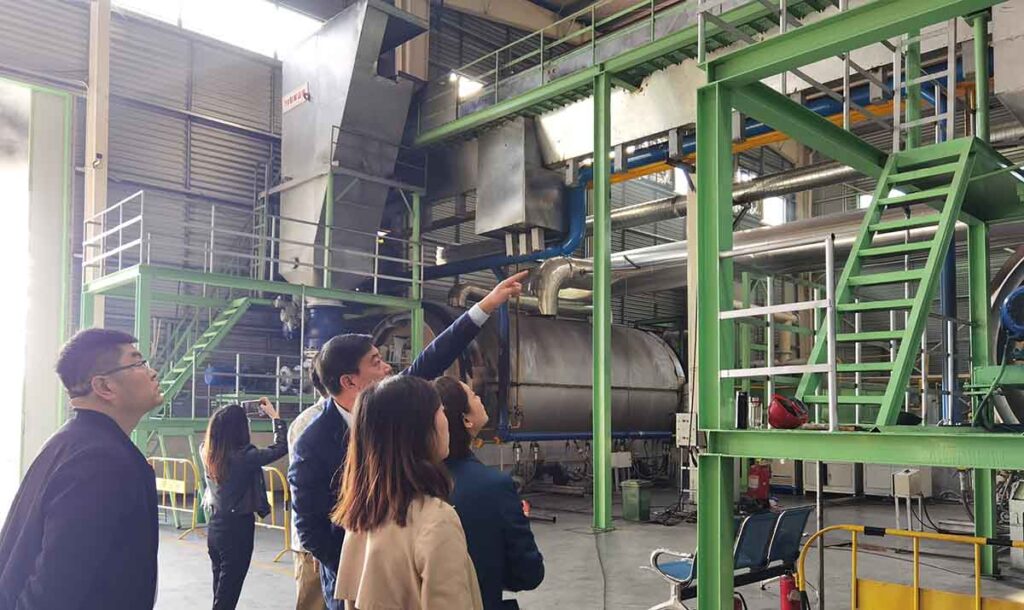
The working process of the continuous tyre pyrolysis plant is a fully automated, closed-loop system, which is divided into 6 core steps. Each step is equipped with professional technical designs to ensure high efficiency, safety, and environmental protection:
- Pre-treatment (shredding & grinding): Waste tyres are first shredded into 5–20 mm chips by a tyre shredder, then steel wires and fibers are separated by a magnetic separator and air separator, and finally ground into 3–10 mm rubber powder by a grinder; the pre-treatment system is equipped with a particle size detector to ensure that the raw materials meet the feeding requirements.
- Continuous feeding system: Qualified rubber powder is continuously transported to the reactor through a double-screw feeder; the feeder adopts variable frequency speed regulation technology, which can adjust the feeding speed according to the reaction status of the reactor, and forms a reliable material seal to prevent pyrolysis gas leakage.
- Pyrolysis reactor: The rubber powder enters the horizontal continuous reactor, which is heated to 450–650℃ by recycled syngas; the reactor adopts a jacketed heating design and a rotating stirring structure to ensure uniform heating of raw materials, and the inner wall is made of 316L stainless steel to resist high temperature and corrosion.
- Condensation & oil collection: Pyrolysis gas generated by the reaction enters a multi-stage condenser (water-cooled + air-cooled) for cooling and condensation; the condenser adopts an innovative baffle design to extend the cooling time of the gas, with a condensation efficiency of ≥95%, converting liquid hydrocarbons into pyrolysis oil which is then collected in a dedicated storage tank.
- Continuous carbon black discharge: Solid carbon black generated after pyrolysis is continuously discharged from the end of the reactor through a sealed discharge device; the discharge device is synchronized with the feeding speed to maintain the stable pressure inside the reactor, and the discharged carbon black is cooled by a water-cooled conveyor and then collected.
- Gas recycling & combustion: Non-condensable syngas (methane, propane, etc.) separated by the condenser is purified by a tar removal device and then recycled to the reactor’s heating system as fuel; the system is equipped with a gas storage buffer tank to ensure stable fuel supply, reducing external fuel consumption by 30–40%.
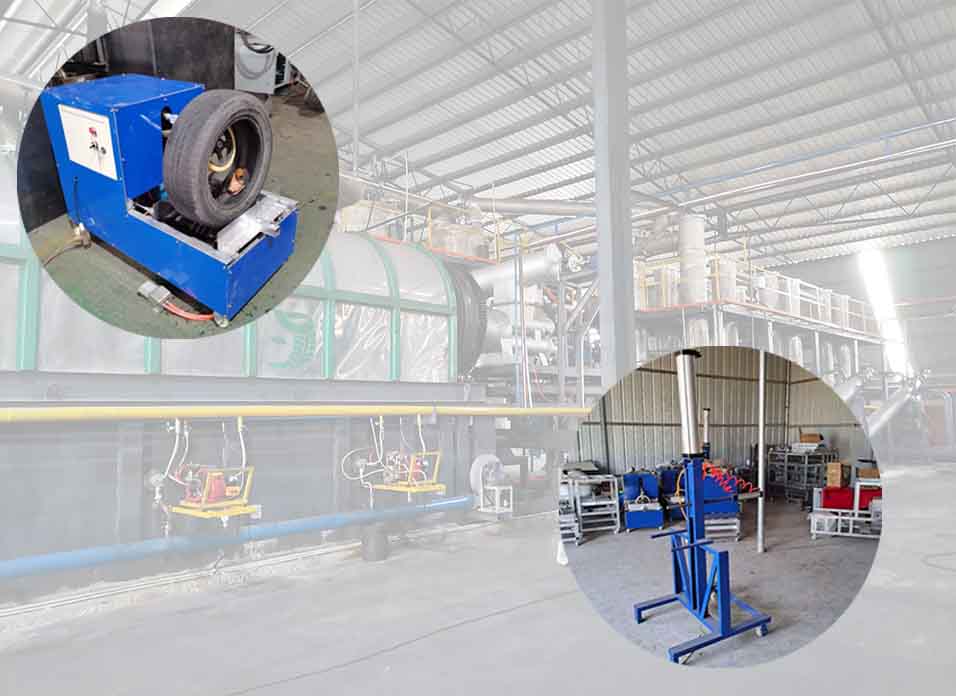
Continuous vs Batch Tyre Pyrolysis Plant
The following table clearly compares the core differences between continuous and batch tyre pyrolysis plants, helping you choose the most suitable equipment according to your project scale and needs:
Comparison Item | Continuous Tyre Pyrolysis Plant | Batch Tyre Pyrolysis Plant |
Feeding method | Automatic continuous feeding, no manual intervention | Manual intermittent feeding, need to stop the reactor |
Raw material size | 3–10 mm rubber powder / 5–20 mm fine chips (strict requirements) | 50–100 mm tyre chips (loose requirements, can accept partial whole tyres) |
Daily capacity | 30 t/day or more (suitable for large-scale production) | 10–15 t/day (suitable for small-scale production) |
Labor requirement | Low (3–5 people per shift for the whole plant) | High (5–8 people per shift, need to manually feed and discharge) |
Shutdown frequency | Low (only for regular maintenance, can run continuously for 3–6 months) | High (once per reaction cycle, 8–12 hours per cycle) |
Oil yield stability | High (oil yield fluctuation ≤±2%, product quality consistent) | Low (oil yield fluctuation ±5–8%, affected by manual operation and reaction conditions) |
Output, Oil Yield & Operating Capacity
For large-scale waste tyre recycling investors, the core advantage of continuous tyre pyrolysis plants lies in the structural advantages of stable output, efficient operation, and low comprehensive cost—not just absolute profit figures. The key indicators are as follows:
- Stable output & oil yield: The continuous tyre pyrolysis plant has a stable daily output of 30–100 t/day (customizable according to needs), and the oil yield of waste tyres is stably maintained at 40–45% (based on 3–10 mm rubber powder). The fluctuation of oil yield is within ±2%, and the quality of pyrolysis oil (calorific value, viscosity) is consistent. This stable output performance ensures that users can sign long-term supply contracts with downstream enterprises, avoiding losses caused by unstable output and quality.
- Unit labor advantage: The fully automated continuous system significantly reduces labor costs. Taking a 50 t/day continuous plant as an example, only 3–5 people are needed per shift to complete the entire production process (including monitoring and simple maintenance). Compared with a batch plant of the same scale (which requires 8–12 people per shift), the annual labor cost can be saved by 60–80%.
- Unit time efficiency advantage: The plant can operate 24 hours a day, 330 days a year (excluding maintenance time), with an annual operating time of up to 7920 hours. In contrast, batch plants have an annual operating time of only 4000–5000 hours due to frequent shutdowns. The high operating time density enables continuous plants to recover investment faster—usually the investment recovery period is 12–18 months, which is 6–12 months shorter than that of batch plants of the same scale.
- Energy efficiency advantage: The recycled syngas can meet 30–40% of the plant’s heating demand, and the continuous heating mode of the reactor has higher thermal efficiency (≥85%) than the intermittent heating mode of batch plants (≤70%). This reduces the unit energy consumption of processing per ton of waste tyres by 25–35%, further reducing the comprehensive operating cost.
As a professional manufacturer with core technology, we provide customized continuous tyre pyrolysis plant solutions according to your local waste tyre resources, project scale, and environmental requirements. We also provide full-process technical services including pre-sales raw material testing, project feasibility analysis, in-sales on-site installation and commissioning (global engineers arrive within 3–7 working days), and after-sales 24/7 online support, ensuring that your large-scale recycling project operates efficiently and stably.
Why Choose a Pyrolysis Machine from PyrolysisUnit?
Sales Service
We provide 24/7 online customer support, as well as video-based after-sales technical assistance from our engineers.
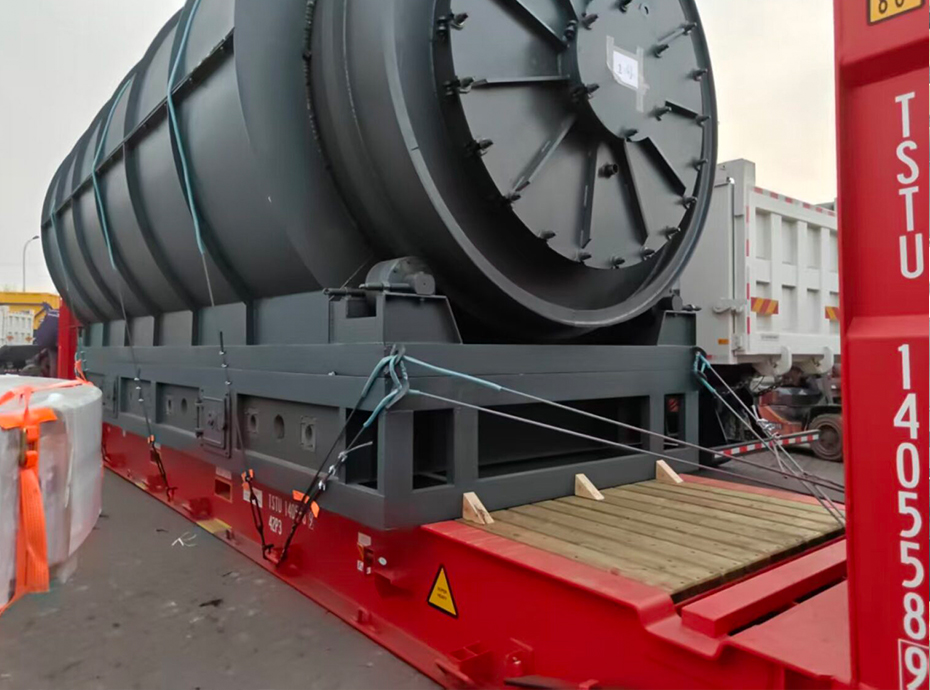
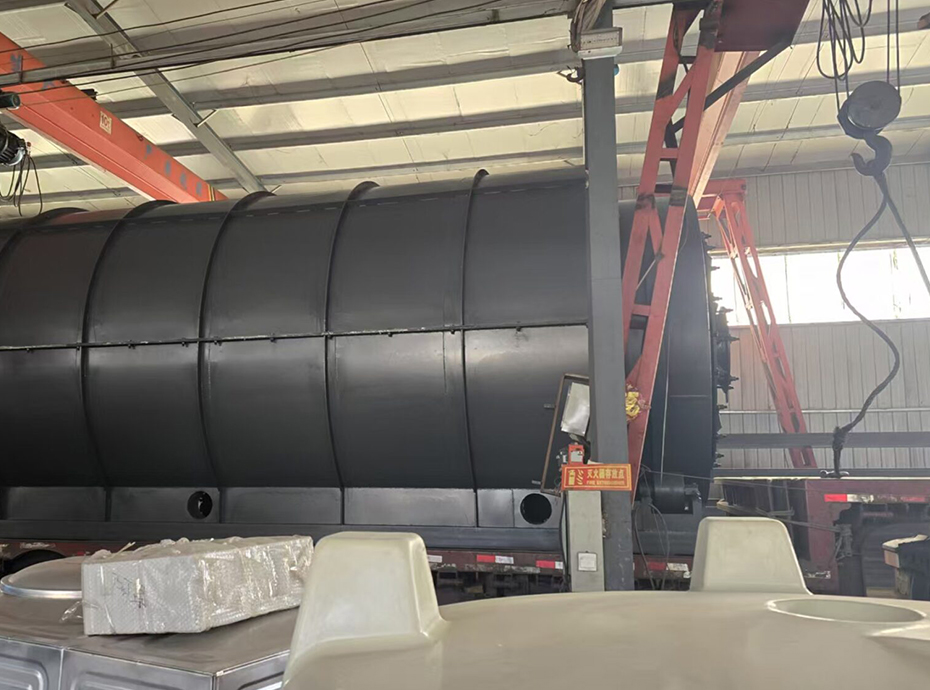
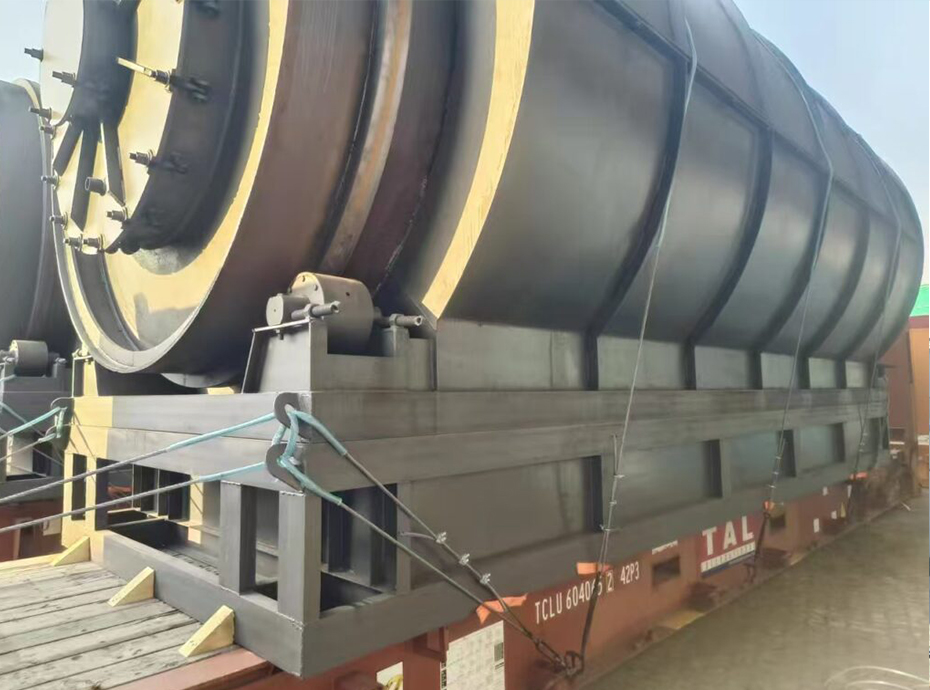
1. The steel plate thickness of the main furnace is 18 mm.
2. The interior of the main furnace is fabricated using a spiral double-sided lap-welding process.
3. The external insulation support framework of the main furnace is constructed from 12 mm thick refractory castable and aluminum silicate cotton blocks.
4. All bolts used are Grade 8.8 high-strength bolts.
- 18-Month Warranty
- Pyrolysis Feas. Report
- 24/7 customer service
- ROI Calculation
- EX Certification
- 23Y Equipment R&D
Specific Parameters
| Item | Specification | |
| Equipment Model | PUHB-30 Type | |
| Structure Type | Horizontal Rotation | |
| Daily Processing Capacity | 30 tons raw material | |
| Working Pressure | Slight Negative Pressure | |
| Main Unit Rotation Speed | 0.8~1.0 rpm | |
| Pyrolysis Reactor Drive Power | 15kw | |
| Cooling Method | Water Cooling | |
| Transmission Method | Chain Drive | |
| Noise Level | ≤85 dB(A) | |
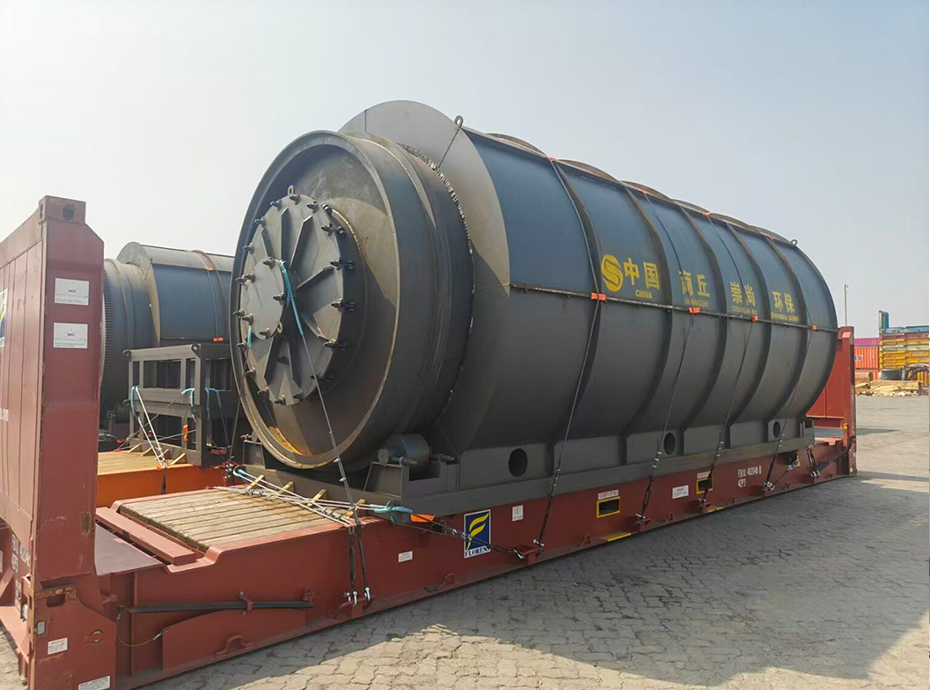
| Main Unit Dimensions | 1800*16000 (mm) | |
| Operation Mode | Fully Automatic Continuous | |
| Main Unit Weight | 40t | |
| Maintenance Cycle | 30~75 days | |
| Total Power | 55kw | |
| Power Parameters | 380v 3-phase 4-wire | |
| Floor Area | 45m*18m | |
| Staffing Requirement | 2 persons/shift | |
| Heating Fuel | Oil, Natural Gas | |
| Component Name | Parameters | Quantity |
| 1. Feeding System | ||
| Supporting Platform | Size: Matched with screw feeder | 2 Sets |
| Screw Feeder | Capacity: 0~1.5t/h | 2 Sets |
| Horizontal Size: 325*5900mm | ||
| Drive: Cycloidal reducer | ||
| Motor Power: 11KW, frequency control | ||
| Accessories: Frame, adjustment pad, ball valve, flange | ||
| High Temperature Valve | 2 Sets | |
PyrolysisUnit Global Case Studies
Distillation Equipment Project in Malaysia In February 2026, a waste-tire recycling client based in Johor,
Waste Plastic-to-Fuel Refining Equipment Two Sets of Waste Plastic-to-Fuel Refining Equipment Delivered to Malaysia in
10-Ton-Per-Day Waste Oil Distillation Facility April 2026: 10-Ton-Per-Day Waste Oil Distillation Facility in Phnom Penh,
Four Sets Of Waste Tire-To-Oil Pyrolysis Equipment Delivery Of Four Sets Of Waste Tire-To-Oil Pyrolysis
Two Waste Plastic-To-Fuel Pyrolysis Units A Project Involving Two Waste Plastic-To-Fuel Pyrolysis Units Delivered To
Waste Tire-to-Fuel Pyrolysis Plant Installation Detailing The Installation Of One Waste Tire-To-Fuel Pyrolysis Plant In
Skid-Mounted Waste Oil Distillation Unit Delivery In March 2025, a prominent mining services company based
Aluminum-Plastic Pyrolysis Plants In Vietnam Two Aluminum-Plastic Pyrolysis Plants In Vietnam, Completed In October 2024
Continuous Tyre Pyrolysis Plant: Compliance, Engineering & Advantages
Part 1: Environmental Protection & Emission Control
- Waste gas treatment: Pyrolysis gas is first purified (tar removal + dust filtration), then non-condensable gas is recycled as fuel; flue gas is treated by activated carbon adsorption + double-layer packing spray tower, with particulate matter ≤10mg/m³, VOCs ≤20mg/m³, meeting global emission standards.
- Sealed design: The entire process (feeding, pyrolysis, discharge, gas transmission) adopts fully sealed equipment and pipelines, with no gas leakage or odor emission; the feeding/discharging ports are equipped with material seal + mechanical seal double protection.
- Environmental compliance: Yes. The equipment meets EU ETS, US EPA, and local environmental regulations in major global markets; we provide complete compliance documents (emission test reports, equipment certification) to ensure smooth approval and operation.
Part 2: Engineering Design & Installation Support
As a professional manufacturer with independent R&D and engineering capabilities, we provide one-stop engineering services covering the entire project cycle, verifying our identity as a real equipment manufacturer rather than an intermediary or content platform:
- Layout design: Customized factory layout plans based on user’s site area, local climate, and process requirements; optimize the layout of equipment, pipelines, and auxiliary facilities to ensure rational space utilization, convenient operation, and compliance with safety distances.
- Commissioning: Professional engineers conduct on-site commissioning after installation, including parameter calibration (temperature, pressure, feeding speed), system debugging, and load test; ensure the plant reaches design capacity and product quality standards before handover.
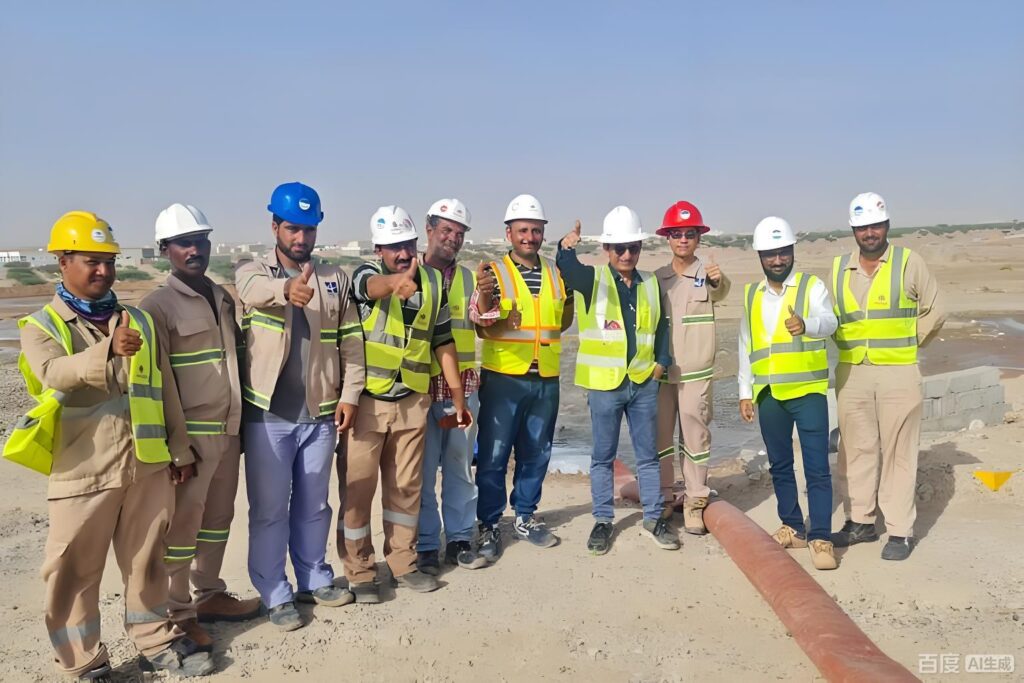
- Overseas installation: Provide global on-site installation services with a professional overseas engineering team (covering 60+ countries); complete installation within the agreed period (20–45 days for standard plants); provide multi-language operation guides and on-site training for operators.
Part 3: Why Choose Our Continuous Tyre Pyrolysis Solution
Our solution’s advantages come from rational design logic and verified project practice, focusing on long-term stable operation and cost control for users:
- Stable operation-oriented design: Adopt horizontal dual-drive reactor + variable frequency feeding system, ensuring uniform material heating and stable pressure inside the reactor; the core components are made of 316L stainless steel, reducing wear and extending equipment service life (continuous operation for 3–6 months without major maintenance).
- Cost-saving design logic: Integrate syngas recycling system (reducing 30–40% external fuel consumption) and fully automated control (reducing 60% labor demand compared to batch plants); the closed-loop system reduces product loss, improving comprehensive economic benefits.
- Global adaptability advantage: Customize process parameters according to local waste tyre characteristics (e.g., different rubber content) and environmental requirements; with 24/7 online technical response and on-site maintenance within 3–7 working days.
- Proven project experience: Our continuous pyrolysis systems have been deployed in 10+ countries including Ghana, Indonesia, Nigeria, Vietnam, and Malaysia — with documented project cases available covering 30T, 50T, and 100T/day configurations. On-site project inspection can be arranged upon request.; provide on-site project inspection and case data sharing to reduce user investment risks.
We provide full-process technical services from pre-sales project feasibility analysis to after-sales lifelong equipment upgrades, becoming a reliable partner for your large-scale waste tyre recycling project.
Part 4: FAQ about Continuous Tyre Pyrolysis Plant
Yes, tire pyrolysis can help reduce environmental pollution in several ways:
Reduces waste tires in landfills
Millions of waste tires are dumped or burned every year. Pyrolysis converts them into useful resources (oil, carbon black, steel wire), significantly reducing landfill pressure.
Prevents open burning of tires
Burning tires releases toxic smoke and harmful gases. Pyrolysis operates in an oxygen-free environment, preventing combustion and reducing toxic emissions.
Converts waste into valuable resources
Pyrolysis oil → industrial fuel
Carbon black → rubber products, inks
Steel wire → recycled metal
This reduces the demand for fossil fuels and raw materials.
Low emissions with proper treatment
Modern continuous pyrolysis plants include:
Gas purification systems
Dust filters
Smoke treatment units
These ensure emissions meet environmental standards.
Utilizes non-condensable gas as energy
The non-condensable gas produced can be used to heat the reactor, reducing external fuel consumption and lowering the carbon footprint.
Several key factors influence both the quality and market price of tire pyrolysis oil:
Quality of the Feedstock (Waste Tires)
Different rubber compositions produce different oil yields and quality.
Cleaner, more uniform tires result in better oil quality.
Sulfur Content
Higher sulfur = lower quality and lower price.
Low-sulfur pyrolysis oil is more valuable because it burns cleaner and meets more environmental regulations.
Processing Technology
Continuous plants with stable temperatures produce more consistent, higher-quality oil.
Better condensation and purification systems improve oil stability and color.
Reactor Temperature
Too low → low oil yield, heavy oil.
Too high → more gas, lighter oil.
A stable 420–480°C generally gives good results.
Oil Purification and Filtration
Removing impurities (water, solids, carbon particles) increases oil value.
Filtered and dewatered oil sells at a higher price.
Local Market Demand
Countries with high fuel costs or limited refinery capacity pay more for pyrolysis oil.
Industrial demand (asphalt plants, boilers, cement factories) also affects price.
Legal and Environmental Regulations
Regions requiring low-emission fuels may limit or tax high-sulfur oils, affecting pricing.
Certified or tested oil often sells at a premium.
How Tyre Pyrolysis Oil Is Produced
Tyre pyrolysis oil is obtained through a process called pyrolysis, where shredded or whole waste tires are heated in an oxygen-free reactor. The steps include:
Feeding the waste tires into a sealed pyrolysis reactor.
Heating the reactor to 420–480°C without oxygen.
Thermal decomposition breaks rubber molecules into oil vapor, gas, carbon black, and steel.
Condensation of oil vapors into liquid pyrolysis oil.
Collection of non-condensable gas (used as fuel), carbon black, and steel wire.
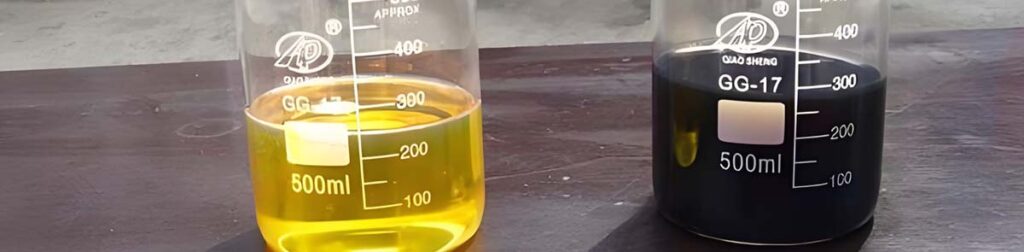
The result is a dark, energy-rich oil with properties similar to heavy fuel oil.
Pyrolysis oil is widely used as industrial boiler fuel, in asphalt and cement plants, and as feedstock for refining into diesel-grade fuel. Carbon black can be reprocessed for rubber manufacturing or activated carbon production, while steel wire is sold directly as scrap metal.
A continuous tyre pyrolysis plant offers strong economics: raw material costs are low (waste tires are often free or paid-for via tipping fees), and the plant produces multiple sellable outputs — pyrolysis oil, carbon black, and steel wire. Syngas recycling reduces fuel costs by 30–40%, and the fully automated system requires only 2–3 operators per shift. For a 30T/day plant, ROI is typically 12–18 months under normal market conditions.